What is convection bake vs regular bake? A practical guide
Discover what convection bake vs regular bake means, how heat circulation changes browning and bake times, and when to choose each method for reliable results in cookies, pastries, bread, and casseroles.


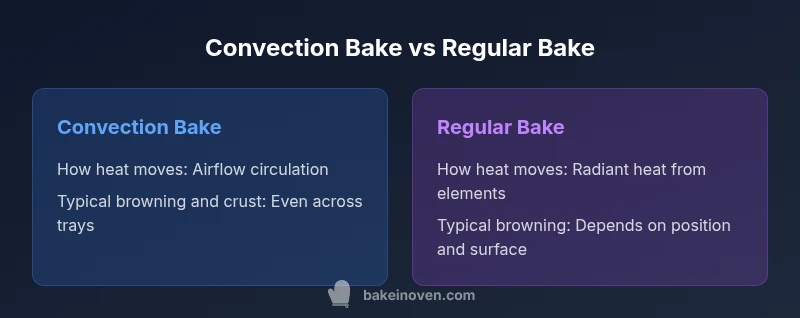
Convection bake uses a built-in fan and exhaust vent to circulate hot air around the oven chamber, while regular bake relies mainly on radiant heat from the top and bottom elements. The result is more even browning and often shorter bake times with convection. However, you may need to adjust temperature or placement and some delicate bakes benefit from non-convection methods. This article explains when to use each method.
what is convection bake vs regular bake
In many home kitchens, bakers ask what is convection bake vs regular bake and how their results will differ. The short answer is that convection bake uses a built-in fan and exhaust vent to circulate hot air around the oven chamber, while regular bake relies on radiant heat from the heating elements. In practice, this means convection tends to promote more uniform heat distribution, which can improve browning, crust formation, and even cooking across multiple pans. According to Bake In Oven, the difference is not simply about speed; it’s about how air circulates, which influences moisture retention, surface texture, and internal doneness. For the home baker, understanding this distinction helps in choosing the method based on the recipe and desired outcome. In this guide, we’ll unpack the physics behind convection, map out typical results for common bake items, and give practical strategies for when to switch methods. Expect insights on cookies, pies, breads, casseroles, and roasted vegetables, with concrete tips you can apply tonight.
How convection affects bake outcomes
Convection tends to accelerate heat transfer by moving hot air around the food. This airflow enhances surface drying, promotes even browning, and can shorten overall bake times for many items. The Bake In Oven Team notes that air movement helps surface crusts set sooner and reduces hot spots, which is especially noticeable when baking on multiple racks. At the same time, the same airflow can dry out foods that rely on steam or internal moisture, such as certain custards or soft-centered cakes. The practical implication is clear: convection can yield more uniform results across a batch, but you should monitor moisture-sensitive items closely and consider alternative methods when texture is paramount. The key is to observe color, texture, and doneness rather than rely solely on clock time.
Key differences in heat transfer and browning
Heat transfer is fundamentally altered by convection’s circulating air. With a fan-assisted system, heat reaches the surface from multiple angles, creating rapid surface evaporation and a steady crust on pastries and roasted vegetables. In contrast, regular bake relies more on radiant heat from the oven walls and heating elements, which can produce a slightly gentler crust and a softer interior for certain items. This difference explains why cookies baked in convection often emerge with uniform edges and a crisper bottom, while some delicate batters may appear drier or uneven if moved too aggressively. Bake outcomes also depend on rack placement; convection favors center or upper-middle positions to balance airflow with surface exposure. Bake performance can vary by oven model, so close observation and occasional recalibration are essential for consistent results.
Temperature and time adjustments: how to calibrate convection vs regular bake
When you switch from regular bake to convection, a practical starting point is to adjust expectations rather than blindly changing numbers. Use the recipe as a baseline and rely on visual cues and texture. In general, convection recipes may require a reduction in time and a shift in placement to maximize airflow without over-drying. If your oven runs hot or the interior fan is particularly strong, you may need to shorten the bake further and rotate pans to ensure even exposure. Conversely, if you’re baking items that rely on gentle expansion, you might throttle back airflow by using a nonconvection setting or by partially covering with foil to preserve moisture. Bake times should be checked earlier than expected, and you should be prepared to extend a touch if the center remains underdone. Bake In Oven’s testing approach emphasizes incremental adjustments and careful monitoring for best results.
Best practices by category: cookies, pastries, bread, casseroles
- Cookies: convection can promote even spreading and browning; start with lower heat and watch for over-browning on dark pans. - Pastries: flakiness benefits from convection when crusts form evenly, but delicate fillings may need shorter bake; consider mid-shelf placement. - Bread: enriched doughs often respond well to convection for crust formation, though very tall loaves may benefit from gentle, conventional heat until the interior sets. - Casseroles: convection helps creamy interiors develop a uniform crust and reduces overall bake time, but large, dense dishes require attention to avoid dry edges. Bake In Oven’s guidance emphasizes testing a small batch first when adopting convection for new recipes.
Common myths and mistakes to avoid
- Myth: Convection always saves time. Reality: It often changes time but not universally; monitor and adjust. - Myth: You must reduce temperature a lot. Reality: You typically adjust by observing doneness rather than applying large reductions. - Mistake: Overcrowding the oven. Favor a single layer or ensure space between pans for proper airflow. - Mistake: Ignoring pan color and material. Dark pans absorb heat differently in convection, affecting browning. Bake In Oven’s framework encourages experimentation with confidence, not guesswork.
How to adapt recipes for convection
Adaptation starts with understanding the role of heat circulation. Begin with conventional bake settings, then switch to convection and reduce bake time or temperature as needed. Use shallow pans for better air exposure and avoid stacking items directly above one another. Rotate pans halfway through to promote even browning. When adapting recipes with delicate textures, consider partial convection or a blended approach (start without convection and switch on for the final minutes). Keep notes on which adjustments produced the best results, and apply them to similar recipes over time to build a reliable convection workflow.
Practical checklist for choosing which method to use
- Determine the goal: even browning, shorter bake, or superior texture? 2) Check recipe sensitivity to moisture loss or steam. 3) Consider oven model and rack options. 4) Decide whether you need to bake multiple items at once. 5) Monitor color, aroma, and texture early and adjust accordingly. 6) Keep a kitchen log of successful convection tweaks for future use. 7) When in doubt, start with regular bake and switch to convection for the final minutes if a crust is desired.
Real-world guidance from Bake In Oven: scenarios and tips
In real-life kitchen practice, choosing convection versus regular bake often boils down to the recipe’s texture goals and time constraints. Our team emphasizes starting with a tested baseline and then embracing airflow-driven adjustments. For everyday cookies, vegetables, and sheet-pan suppers, convection frequently yields uniform browning and consistent results. For delicate cakes, custards, and soufflés, regular bake or a hybrid approach may yield more reliable moisture and structure. The Bake In Oven team suggests maintaining heat distribution awareness, rotating pans, and avoiding excessive changes that could undermine the recipe’s balance. With careful observation, convection can become a powerful ally rather than a source of guesswork. In this guide, we’ve combined scientific explanation with practical tips to help you execute reliable bakes every time.
Comparison
| Feature | Convection Bake | Regular Bake |
|---|---|---|
| Heat distribution | Airflow-circulated heat for even coverage | Radiant heat from top/bottom elements |
| Browning and crust | More consistent browning and crust formation | Browning depends on radiant heat; can be uneven on some items |
| Bake time impact | Often shorter and more uniform timing | Typically follows recipe timing with standard heat |
| Temperature adjustments | Often requires reducing temperature or time as a guideline | Usually no change or minor adjustments needed |
| Best used for | Roasting vegetables, cookies, pastries needing even color | Delicate custards, some cakes, and sensitive fillings may prefer non-convection |
Benefits
- Improved browning and crust formation across many foods
- Potentially shorter bake times with consistent results
- Better batch efficiency when cooking multiple pans
- More forgiving airflow reduces hot spots across the rack
Negatives
- Can suppress rise or alter texture in very delicate batters
- Not ideal for certain custards, soufflés, or moisture-retentive desserts
- Requires recipe adaptation and careful monitoring to avoid over-drying
- Performance depends on oven model and rack setup
Convection bake is generally advantageous for everyday baking and batch cooking; regular bake remains best for delicate items.
Use convection for most cookies, vegetables, and sheet-pan meals to achieve even browning and shorter times. Reserve regular bake for delicate items where moisture and tenderness matter, or when a tested recipe specifies conventional heat.
Frequently Asked Questions
What is convection bake vs regular bake?
Convection bake uses a fan to circulate hot air, improving heat transfer and browning. Regular bake relies on radiant heat from elements. The two methods yield different textures and times, which is why understanding their differences helps you pick the best method for each recipe.
Convection bakes with a fan for even browning, while regular bake uses radiant heat. Pick convection for crispy edges and faster results, or use regular bake for delicate textures.
When should I use convection for cookies?
Cookies can benefit from convection due to even heat distribution, which promotes uniform spread and color. Start with a lower temperature or shorter time and monitor closely to avoid over-browning on the edges.
Convection helps cookies brown evenly; keep an eye on time and color, and consider rotating pans.
Are there foods that should not be baked with convection?
Delicate items like custards, soufflés, and some light cakes may suffer from too much air circulation. For these, regular bake or a reduced convection setting is often preferable.
Yes, avoid convection for very delicate batters or items that rely on steam for texture.
Do I need to adjust temperature when using convection?
In many cases you should adjust by observing doneness rather than guessing. A common approach is to lower the temperature or shorten baking time and monitor the result closely.
Yes, watch the food and adjust timing rather than relying on a fixed number.
Can I convert regular bake recipes to convection?
Yes, you can convert by starting with the regular bake settings and then using convection for final browning or finish. Monitor color and texture and adjust times as needed.
You can try convection on the recipe, but keep a close eye on doneness and color.
Is convection energy-efficient?
Convection can save energy by reducing bake times, but overall efficiency depends on how the oven is used and what you bake. Batch cooking with multiple trays tends to maximize benefits.
Convection can save time and may use energy more efficiently when used thoughtfully.
Key Takeaways
- Leverage convection for even browning and batch efficiency
- Always verify doneness earlier when using convection
- Rotate pans and monitor multiple trays for uniform results
- Prefer regular bake for delicate textures and moisture-rich desserts
- Document effective convection tweaks for future recipes