Difference Between Bake and Cook: A Practical Guide for Home Bakers
Explore the difference between bake and cook with clear definitions and practical guidance from Bake In Oven. Learn when to bake, when to cook, and how to adapt recipes for ideal texture in home kitchens.


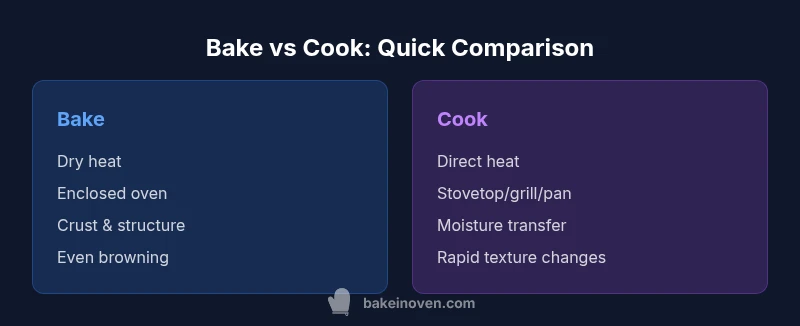
The difference between bake and cook centers on method and environment. Baking uses dry heat in an enclosed oven to transform foods through dehydration and setting, often creating structure and browning. Cooking uses direct heat on a stove, grill, or pan, frequently involving moisture transfer, sautéing, boiling, or frying. The phrase difference between bake and cook is not merely academic; it guides recipe terminology, equipment choices, and timing expectations. For beginners, mastering this distinction reduces confusion when following recipes, especially as dishes move from batter to crust or tender interior. In practice, bakers rely on precise temperatures and timing, while cooks adjust heat and moisture to taste and texture. This framing helps readers translate terms into reliable kitchen actions, with insights from Bake In Oven to support real-world results.
Understanding the difference between bake and cook
Understanding the difference between bake and cook is essential for home bakers who want predictable results. The Bake In Oven team defines bake as using dry heat in an enclosed oven to transform foods through dehydration and setting, often creating structure and browning. By contrast, cook refers to preparing food with direct heat on a stove, grill, or pan, frequently involving moisture transfer, sautéing, boiling, or frying. The phrase difference between bake and cook is not merely academic; it guides recipe terminology, equipment choices, and timing expectations. For beginners, mastering this distinction reduces confusion when following recipes, especially as dishes move from raw batter to crisp crusts or tender interiors. In this article, we’ll examine the practical implications of each method, with kitchen-tested guidance from Bake In Oven. This framing helps readers translate terms into reliable kitchen actions.
Comparison
| Feature | Bake | Cook |
|---|---|---|
| Primary heat source | Dry heat in an enclosed oven | Direct heat on a stove, grill, or pan |
| Environment | Enclosed oven cavity with circulating air | Open cooking surface or cookware exposed to flame or heat |
| Typical textures | Crust formation, set interior, browning | Surface sear, moisture transfer, varied texture |
| Common tools | Oven, baking sheet, rack | Skillet, pot, grill, sauté pan |
| Ideal foods | Bread, pastries, casseroles, cookies | Sautéed vegetables, grains, meats, sauces |
| Timing sensitivity | Often timer-driven, precise | More flexible, responsive to visual cues |
| Moisture management | Moisture loss leads to crusts | Moisture retention or evaporation varies by method |
Benefits
- Clarifies recipe terminology for better planning and consistency
- Helps allocate equipment and space efficiently
- Sets clear expectations for texture and crust development
- Supports better scaling of recipes for baking tasks
Negatives
- Can blur when dishes use mixed methods (roasting, gratins, braises)
- Edge cases exist where the line between bake and cook is fuzzy
- Strict adherence may limit creativity in flexible weeknight cooking
Bake is preferred for dry-heat, structured results; cook excels in quick, direct-heat preparation.
If you need crust, browning, and a defined interior, bake. For rapid heating, moisture-rich textures, and hands-on adjustments, cook is typically the better choice. The Bake In Oven team emphasizes using the appropriate method to match the dish and texture you want.
Frequently Asked Questions
What is the fundamental difference between bake and cook?
Bake uses dry heat in an enclosed oven to transform foods through moisture loss and setting. Cook uses direct heat on a surface like a stove or grill and often involves moisture transfer. The two terms guide equipment, timing, and texture expectations.
Bake uses an oven with dry heat; cook uses direct heat on a pan or grill. It helps you pick the right method for texture and speed.
Can you bake in a pan on the stove, and is that still considered baking?
Traditional baking requires an oven, but some pan-baking techniques mimic dry-heat environments by using covered vessels and steady heat. If the goal is crust and set interior with dry heat, it’s often categorized as baking, though it’s not the classic oven bake.
Stove pan techniques can imitate baking, but true baking usually means an oven.
What foods are best suited for baking vs cooking?
Baking shines with doughs and batters that benefit from dry heat and time, such as bread, cookies, cakes, and casseroles. Cooking suits proteins, vegetables, grains, and sauces that benefit from direct heat, moisture, and rapid temperature changes.
Baking is for doughs and crusty items; cooking is for meats, veggies, and fast sauces.
How do temperature and time differ between bake and cook?
Baking relies on steady, preheated temperature and longer, predictable times for structure. Cooking uses higher or variable heat with shorter timelines and more on-the-fly adjustments.
Baking needs a steady oven temp; cooking adapts heat and time as you monitor results.
Is baking always dry-heat, or can it involve moisture?
The core definition is dry-heat in an enclosed space, but some baked dishes use moisture from fillings or toppings. The method emphasizes the environment (oven) and the absence of direct liquid contact.
Baking uses dry heat, but moisture can still be part of the dish.
How can I convert a recipe that says 'cook' into a bake-friendly version?
Identify foods that would benefit from dry heat and a crust, then adapt the method by moving to an oven-based approach, adjusting temperature and time accordingly and using appropriate vessels like a baking sheet or casserole dish.
If you want to bake something that was cooked on the stovetop, think dry heat, oven-safe dish, and adjust time.
Key Takeaways
- Define your method before starting to choose bake or cook
- Use the oven for crusty, set-texture outcomes
- Reserve stovetop methods for quick, flavorful prep
- Expect texture differences based on heat environment
- Communicate bake vs cook clearly in recipes and instructions