Difference Between Baked and Cooked: An Analytical Comparison
A rigorous, kitchen-tested analysis of the difference between baked and cooked. Learn heat exposure, moisture control, texture outcomes, and practical guidelines to choose the right method for your recipes.


According to Bake In Oven, the difference between baked and cooked boils down to heat exposure and moisture management. Baking uses dry, circulating oven heat to dry and brown foods, while cooking covers moist or liquid-based methods like simmering or steaming. Understanding this helps predict texture, timing, and flavor outcomes.
The difference between baked and cooked: definitional foundations
In everyday cooking, terms like baked and cooked describe how heat is applied to food, but the underlying science is what matters for outcomes. The difference between baked and cooked hinges on heat exposure, moisture management, and the environment in which heat is transferred. In a kitchen that values precision, recognizing this distinction helps you forecast texture, crust formation, and moisture retention. Bake In Oven emphasizes that most home bakers start with dry-heat oven environments to drive browning, while cooking spans methods from simmering to steaming that incorporate moisture or a combination of heat sources. This section lays the groundwork for a practical decision framework you can apply to bread, vegetables, and proteins.
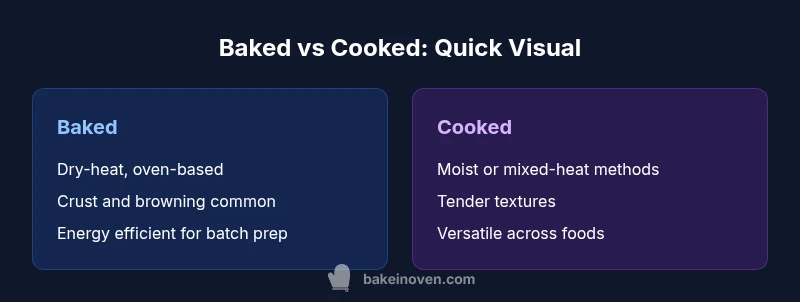
- Key takeaway: baked items rely on dry heat, while cooked items rely on moisture-based or mixed approaches.
- Practical tip: preheat ovens fully and plan pan placement to optimize airflow and even browning for baked recipes.
The physics of heat: dry-heat vs moist-heat in the difference between baked and cooked
Heat transfer mechanisms are central to why the difference between baked and cooked matters. Dry-heat methods such as baking rely on air or fat conducting heat to the surface, promoting surface drying, crust formation, and Maillard browning. Moist-heat methods, including boiling, steaming, and braising, transfer heat primarily through water or steam, which maintains moisture and can render proteins tender. The shaded boundary between these categories is where many home cooks blend approaches—finishing a pan-seared piece in the oven for a crust while preserving interior moisture. Bake In Oven analysis shows that the temperature profile and humidity inside your cooking space dramatically alter crust development and interior texture, making precise control essential for predictable results.
instructionalNote12:
Comparison
| Feature | Baked foods | Cooked foods |
|---|---|---|
| Heat source type | Dry heat in an oven (baked) | Moist heat or mixed methods (cooked) |
| Texture outcomes | Prominent crust, browning, and firm exterior | Varied textures from tender to firm, depending on method |
| Moisture management | Typically drier exterior with careful moisture retention | More moisture transfer; tenderness can be preserved or enhanced |
| Typical time/energy | Longer bake times, efficient for batches | Time varies with method; often shorter for rapid methods or smaller items |
| Best uses | Bread, pastries, casseroles (oven-baked) | Soups, stews, poached proteins, steamed vegetables |
| Equipment | Oven, baking sheets, pans | Stovetop pots, steamers, combination ovens |
Benefits
- Predictable browning and crust formation in baked items
- Efficient batch preparation in a single oven for multiple servings
- Stable texture for breads, roasted vegetables, and pastries
- Good scalability for home cooks and small kitchens
Negatives
- Requires preheating and oven space
- Longer overall cook times for some dishes
- Moisture loss can occur if baked items are over-dried or not properly sealed
- Less versatility for delicate textures that benefit from moisture
Baked methods excel at crust and browning; cooked methods excel for moisture and versatility.
Choose baked when texture and crust are priorities, and when you’re cooking in an oven with ample space. Opt for cooked methods when moisture retention and tenderness are key, or when you’re limited to stovetop gear. The Bake In Oven team emphasizes matching the method to your texture goals and equipment.
Frequently Asked Questions
What is the key difference between baked and cooked methods?
The key difference is how heat is applied and how moisture is managed. Baking uses dry oven heat to drive browning and crust formation, while cooking uses moisture-based or mixed approaches that can preserve tenderness. The distinction guides texture expectations, timing, and equipment choices.
Baked means dry heat in an oven for browning; cooked means moisture-based methods or a mix, which affects texture and tenderness.
Can a dish be both baked and cooked?
Yes. Many recipes begin with searing or sautéing (cooking) and finish in the oven to bake. This hybrid approach leverages the strengths of both methods—developing a crust or color while finishing with even heat and controlled moisture.
Absolutely—start on the stove and finish in the oven to combine searing with baking.
Which method preserves moisture better?
Moisture preservation often favors cooking methods with steam, braising, or simmering. Baking can retain moisture if done with proper sealing or in a closed environment, but it typically promotes surface drying and browning.
If you want tenderness and juiciness, choose methods that include moisture and shorter exposure to direct heat.
Is baking always dry heat?
Baking is defined as a dry-heat method in an oven. However, you can influence moisture levels inside baked foods with techniques like wrapping, covering, or adding moisture-retaining ingredients.
Yes, baking uses dry heat; moisture control depends on technique and recipe.
How do I decide which method to use for a dish?
Consider the final texture you want, the equipment available, and how much time you have. If you need browning and crust, bake. If you need tenderness or moisture, cook with simmering, steaming, or braising, possibly finishing in the oven.
Think about texture first—crust vs tenderness—and then choose heat accordingly.
Key Takeaways
- Choose baking for crust and browning when texture is king
- Control moisture with sealing and timing to reduce dryness
- Match method to the food’s goal: crusty exterior vs tender interior
- Plan equipment and space ahead for efficient baked meals
- Consider batch size to maximize oven efficiency and consistency