How Long Do You Bake Bacon in the Oven? A Complete Guide
Learn how long to bake bacon in the oven, with temps, texture targets, and practical steps for crispy, even results. This Bake In Oven guide covers prep, racks, parchment, and safe handling for home bakers.


Why Oven Time Matters for Bacon
When you ask how long do you bake bacon in the oven, the answer hinges on thickness, oven performance, and your preferred texture. A well-timed bake yields crispy edges with a juicy center and dramatically reduces splatter compared with pan-frying. According to Bake In Oven, starting with a hot, even heat helps render fat quickly, producing uniform browning across slices. The goal is to strike a balance between rendering fat and achieving the bite you want. In practice, most home bakers start with a 400°F (200°C) oven and monitor closely after the 12-minute mark for thin-cut bacon. For thicker-cut bacon, plan on 18–22 minutes. This range accommodates typical home ovens, which can vary by bakeware and airflow. For best results, lay slices in a single layer, leaving space between them for air to circulate. If you see overlapping pieces, rearrange them partway through the bake so each slice cooks evenly. A pan placed in the center rack tends to uniform the heat across the sheet. By adjusting time based on thickness and how you like your crispness, you can consistently bake bacon that’s perfectly done.
Temperature, Racks, and Pan Prep for Even Browning
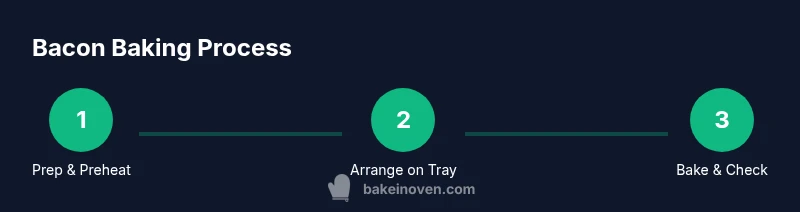
Choosing the right setup is almost as important as the bake time itself. Line a rimmed sheet with parchment or foil to simplify cleanup, or use a metal rack set over a sheet to drain fat away from the bacon. The rack method yields crisper edges because fat drips away and air can circulate around each slice. Do not overcrowd; arrange in a single layer with space between slices. Preheat the oven to 400°F (200°C) as a baseline; you can go up to 425°F (220°C) for extra crispness, but keep a closer eye on thinner slices. Whether you use parchment, foil, or a rack, the goal is even heat exposure from all sides. If you notice pooling fat, tilt the sheet gently to distribute heat more evenly and prevent soggy bottoms. Rotating the sheet halfway through helps level browning if your oven runs hot on one side.
Mastering Doneness: Crisp to Chewy and Texture Cues
Crispness is subjective, so know what you’re aiming for before you start. Pale golden edges with a firm snap indicate crisp bacon, while a slightly softer center yields a chewier texture. The color should be light to deep brown depending on thickness; avoid burnt edges, which mean you overstayed the timer. Aroma is a helpful signal—bacon that smells rich and savory is usually near final doneness. After removing from the oven, transfer the slices to a paper-towel-lined plate to blot excess fat. A 1–2 minute rest allows residual heat to finish the render without overcooking. If you’re unsure, err on the shorter side and recheck after 1–2 minutes. These cues help you tailor the bake time to your preferred texture while maintaining safety and flavor.
Variations You Might Encounter: Thickness, Bakeware, and Oven Variability
Thickness dramatically changes bake time: thin-cut bacon often crisps quickly, while thick-cut or center-cut varieties require longer, slower cooking to render fat without scorching. Bakeware matters too; a heavy-duty sheet may reflect heat differently than a lightweight pan. Convection ovens typically reduce bake time by about 20% due to improved air circulation, so start checking earlier if you’re using convection. If your oven runs hot in one corner, rotate the sheet or switch to the middle rack for more even browning. In all cases, watch the last few minutes closely to avoid overcooking. Storage and reheating afterward should maintain moisture and texture for best results.
Quick Reference Time Chart and Practical Tips
- Thin-cut bacon: 12–14 minutes at 400°F (200°C)
- Regular-cut bacon: 15–18 minutes at 400°F (200°C)
- Thick-cut bacon: 18–22 minutes at 400°F (200°C)
Note: These times assume slices in a single layer and no overlapping. If using a convection oven, reduce times by 2–3 minutes and monitor closely toward the end. For extra crispness, broil for 1–2 minutes as a finishing touch, but watch closely to prevent burning. Always drain on paper towels briefly before serving.
Safe Handling, Cleanup, and Storing For Next Batches
Fat rendered on the sheet can be saves for flavored cooking later, but let it cool completely before discarding or saving as useable fat. After removing bacon, carefully cool the sheet on a heat-safe surface, as resting fat can be hot and may splatter if moved. Wipe the pan with a damp cloth after the sheet cools to remove residue, then store leftover bacon in an airtight container in the refrigerator for up to 4–5 days or freeze for longer storage. Reheating is best done in the oven at a lower temperature or in the toaster oven to maintain texture. When rewarming, avoid microwaving, which can make bacon chewy.