What Temperature Do I Bake Bacon in the Oven? A Home Baker's Guide
Discover the best oven temperature for baking bacon, plus tips for crisp texture, even cooking, and safe handling. This Bake In Oven guide covers temps, times, and cleanup for reliable results every morning.


Bake bacon at 400°F (200°C) on a parchment-lined sheet in a single layer. Cook for 12–15 minutes, turning once for even crispness, until edges are browned and the center sets. Let rest 2 minutes before serving. If you prefer extra crisp, broil for the last minute.
Why Oven Temperature Matters for Bacon
Getting bacon right in the oven starts with temperature. The heat you apply determines how fat renders, how quickly the meat browns, and whether you end up with crisp edges or a soggy center. A steady, moderate oven allows the fat to melt evenly while the meat contracts and crisps, rather than curling and leaving underdone portions. According to Bake In Oven, choosing a reliable baking temperature helps the fat render consistently and reduces the risk of uneven results across a tray of bacon. The goal is a balance between render and browning, so the slices dry a little on the surface but stay juicy inside. In practice, you’ll notice that a hotter oven yields faster browning but can also burn edges if you’re not watching closely, while a cooler oven tends to yield chewier strips. Understanding this balance empowers you to tailor texture to your preference and to culinary needs, whether a crispy breakfast side or a more tender finish for salads and sandwiches.
Ideal Oven Temperature Range for Crisp Bacon
There isn’t a single magic temperature that works for every bacon type, but most home cooks achieve the best balance by starting around the mid to high end of the common range. In Bake In Oven analysis, a stable oven in the 400°F (204°C) neighborhood is a reliable starting point for crisp, evenly cooked strips. Depending on thickness, some cooks lean toward 375°F (190°C) for a gentler render, while others push toward 425°F (218°C) for quick browning. The key is to aim for even heat across the entire pan and to monitor carefully as the first batches can influence how heat distributes in the oven. When you bake bacon, plan for a total time window that gives you a crisp exterior without drying out the interior; use your eyes and a quick test bite to determine when it’s ready. If you use thinner slices, you’ll likely reach the desired crispness sooner than with thick-cut bacon.
Preparing Your Pan and Bacon for Even Cooking
Even cooking starts before the oven warms up. Line your sheet pan with parchment paper or aluminum foil to catch grease and simplify cleanup. If you want maximum crispness and the least soggy underside, place a wire rack on top of the pan so the fat can drip away from the bacon, but that rack is optional. Start with cold or room-temperature bacon slices so you don’t shock the meat by sudden heat, and avoid overcrowding; space between slices ensures steam can escape and air can circulate. Pat the bacon dry with a paper towel—wet surfaces steam rather than crisp—then lay the slices in a single, even layer. If you’re cooking different thicknesses, separate them on the pan so that thinner pieces don’t cook too fast while thicker pieces catch up. Bakeware that conducts heat evenly, such as heavy-duty sheet pans, will help you achieve consistent results across the tray.
The Basic Oven-Baking Method (Overview)
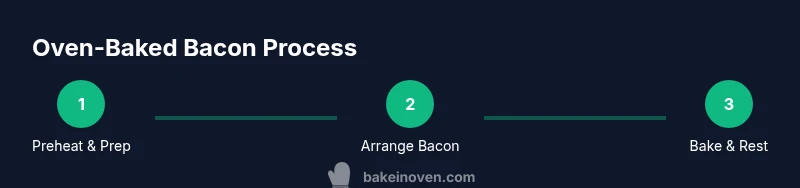
This method provides a reliable path to bacon with minimal babysitting. Preheat the oven to your chosen temperature, then arrange the slices on the prepared pan in a single layer. Insert the pan into the oven and bake until the edges are browned, the fat has rendered, and the center is set. For most regular-cut bacon, you’ll check at the lower end of the time window and continue cooking as needed; for thick-cut bacon, you may need longer. If you want extra crisp, you can turn the slices halfway through baking or switch the oven to broil for the final minute—watch closely to prevent burning. When finished, remove the bacon to a warm plate and let it rest briefly to let juices settle. This approach minimizes splatter, helps render fat predictably, and produces dependable results for busy mornings or big batches.
Variations for Thickness: Regular vs Thick-Cut
Regular-cut bacon renders faster and browns evenly at moderate temperatures, producing a consistent crisp with a shorter cook time. Thick-cut bacon needs more time for fat to render, which means a longer bake at a similar temperature for a sturdier bite. If you’re using thick-cut slices, plan on extending the bake by several minutes and consider using a lower rack or a slightly lower temperature to avoid scorching the surface while the interior finishes. Some cooks slice thick-cut bacon in half lengthwise for even thickness, though many prefer the traditional strip. When possible, read the package instructions for recommended bake times and adjust based on your oven’s performance. Bake a small test batch to calibrate your preference—this helps you lock in a standard time and keep a consistent outcome across future cooks.
Troubleshooting Common Issues
Overcrowding is the most common culprit for uneven cooking; if pieces touch or stack, heat cannot circulate, and some slices stay soggy while others burn. If the edges burn before the centers finish, reduce the temperature by 25°F (15°C) or move to a cooler rack position. If the slices come out pale, extend the time slightly or allow a touch more fat to render by raising the temperature a notch. Grease pooling on the sheet can create soggy bottoms; a rack can prevent that by elevating the meat above the fat. If your oven runs hot or uneven, rotate the pan halfway through and use a second pan to distribute heat more evenly. Remember that bacon continues to crisp a little as it rests after removing from the heat, so plan to pull it just shy of your preferred level and allow a brief rest.
Storage, Reheating, and Cleaning Up
Cooked bacon can be stored in the refrigerator for several days or frozen for longer-term use. Keep it in an airtight container or wrap it in parchment and plastic, and reheat gently to preserve texture. Reheating on a sheet pan in a warm oven or a skillet on the stovetop helps re-crisp the bacon, but beware of overdoing it, which can turn it dry and crumbly. When handling hot bacon or pans, use heat-resistant gloves and tongs; grease can splatter when you move hot bacon to a plate. For cleanup, soak the pan while the grease is still warm to prevent hard-set residue, then wipe with paper towels and wash. If you kept the rack, wash it separately to remove lingering fats. Proper storage helps you preserve texture and flavor for leftover dishes like BLTs, salads, and breakfast plates.
Quick Reference: Temperature, Time, and Texture
Here is a practical cheat sheet you can print and pin to the fridge. At 375°F (190°C), expect a gentler render and softer bite; at 400°F (204°C), a dependable crisp; at 425°F (218°C), faster browning with a higher risk of edge scorching. For regular-cut bacon, begin checking around 12 minutes and adjust by 2–3 minutes based on color and render. For thick-cut bacon, plan on 15–20 minutes and consider lowering temperature slightly if the surface browns too quickly. Remember to rest the slices for 1–2 minutes after removal; carryover heat will finish the crisping. These guidelines provide a practical workflow for everyday cooking and larger batches, ensuring consistent results across different ovens and pans.
Authoritative Resources
This article references reputable sources for kitchen safety and cooking principles. For official guidelines on safe food handling and pork preparation, consult government and university resources. These sources help you make informed decisions in your home kitchen and align practice with widely accepted safety standards provided by trusted institutions.
Tools & Materials
- Oven(Preheat to chosen temperature (e.g., 400°F / 200°C).)
- Sheet pan(Prefer heavy-gauge for even heating.)
- Parchment paper or aluminum foil(Line the pan for easy cleanup.)
- Wire rack (optional)(Elevates bacon for crisper underside.)
- Tongs or a spatula(Use to turn or remove slices safely.)
- Paper towels(Pat slices dry before baking.)
- Meat thermometer (optional)(Check internal texture if needed.)
- Cool rack or plate(Rest hot bacon briefly after baking.)
Steps
Estimated time: Total time: 15-25 minutes
- 1
Preheat oven and prepare pan
Preheat your oven to 400°F (200°C). Line a sheet pan with parchment paper and set a rack on top if you want extra drainage for crisper bottoms. Pat bacon dry with paper towels to remove surface moisture, which helps render fat cleanly.
Tip: Allow the oven to reach full temperature before loading the pan. - 2
Arrange bacon in a single layer
Lay slices flat in a single layer without overlapping. If you have different thicknesses, place thinner slices toward the outer edges so they don’t overcook before the thicker pieces finish.
Tip: Spacing space between slices improves air flow and even browning. - 3
Bake and monitor
Place the pan in the center of the oven and bake until edges brown and fat renders. Expect mid-range times of 12–15 minutes for regular bacon; thicker cuts will take longer. Rotate the pan halfway for even heat distribution.
Tip: Keep an eye on the first batch to calibrate your oven’s performance. - 4
Flip or broil for final crisp
If you want extra uniform crisp, flip the slices halfway through baking or switch to broil for the final 60–90 seconds, watching closely to prevent burning.
Tip: Broil is fast—don’t walk away while the oven is on broil. - 5
Remove and rest
Transfer bacon to a warm plate or a rack and let it rest for 1–2 minutes. The brief rest helps the fat set and improves texture.
Tip: Rest time is part of achieving crisp texture without overcooking. - 6
Clean up and reuse grease wisely
Pour cooled grease into a heat-safe container for reuse or proper disposal once solidified. Wash the pan and rack with warm, soapy water to remove fat residue.
Tip: Don’t pour hot grease down the drain; it can solidify and clog plumbing.
Frequently Asked Questions
What temperature should I bake bacon in the oven?
A common starting point is 400°F (200°C) for most bacon. This temperature delivers a reliable balance of rendering fat and browning. If slices are very thin, you may need less time; if thick-cut, you might need more time. Always check for crisp edges and a set center, and adjust based on how your oven behaves.
Start with 400°F for reliable results; adjust by thickness and your oven’s quirks.
Should I preheat the oven before baking?
Yes. Preheating ensures the bacon starts cooking immediately and renders evenly. Skipping preheating can lead to uneven texture and longer total time.
Yes, preheat so the bacon begins cooking evenly right away.
Do I need to flip the bacon halfway through?
Flipping is optional but helpful for even browning on both sides. If you skip flipping, rotating the pan halfway through can also improve uniformity.
Flipping or rotating the pan helps even browning.
Can I bake frozen bacon?
Yes, you can bake bacon from frozen, but expect a longer cook time and more watchful checks for doneness. Thawing before baking yields more predictable results.
You can bake it from frozen, but thawing first gives more predictable results.
What if my bacon sticks to the pan?
Use parchment or foil to prevent sticking. A light spray of cooking oil on the rack can help, and ensuring the slices are dry reduces adhesion.
If it sticks, use parchment and dry slices next time.
How should I store and reheat cooked bacon?
Cool the bacon and store in an airtight container in the fridge for a few days, or freeze for longer. Reheat on a sheet pan in a warm oven or briefly in a skillet to restore crispness.
Cool and store in the fridge; reheat to crispness later.
Watch Video
Key Takeaways
- Preheat to a stable temperature for even cooking
- Line pan and avoid overcrowding
- Adjust time based on thickness for best texture
- Rest briefly to finish crisping
- Store leftovers safely and reuse grease wisely