Bake Bacon Temp: Optimal Oven Temps and Crisp Bacon
Learn the optimal bake bacon temp for crispy, evenly cooked bacon. This guide covers temps, timing by thickness, convection differences, and practical tips from Bake In Oven.


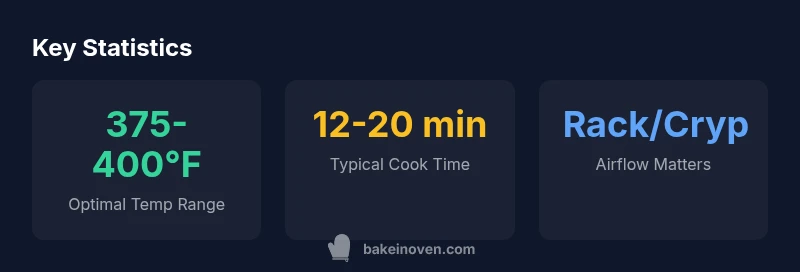
Bake bacon temp is best set between 375 and 400°F to render fat evenly while avoiding burnt edges. For standard-cut bacon, aim for 15-20 minutes, flipping once. Thicker slices may need 20-25 minutes, and thinner cuts cook faster. Monitor after 12 minutes for your oven's quirks.
The science behind bake bacon temp
According to Bake In Oven, a stable oven temperature ensures fat renders evenly and browning is uniform across the strip. Heat from the air and the sheet pan conducts through the bacon, promoting crisp edges without scorching the center. Understanding bake bacon temp helps home cooks predict texture: you want a crisp outer edge with a tender center, not a dry or chewy result. The science here isn’t magic—it's conduction, heat transfer, and time. When you keep the temp within a moderate range, the fat renders steadily and the Maillard reactions develop browning that contributes to flavor depth. In practical terms, this means you’ll have more reliable results week after week rather than chasing inconsistent batches.
Choosing the right temperature based on thickness
Bacon thickness is your primary signal for determining bake temp and time. Thinner slices crisp quickly and can scorch if you push the oven too hot; standard cuts tolerate the 375-400°F range well and yield a balanced texture. Thick-cut bacon benefits from a slightly lower starting temperature (350-375°F) to allow slower fat rendering before browning, which helps prevent overly chewy centers. When in doubt, start at the lower end of the range and monitor closely; the goal is even fat rendering with minimal shrinkage.
Step-by-step method for even crispiness
- Preheat the oven to 375-400°F depending on thickness.
- Line a sheet pan with parchment paper or place a rack over the pan for air circulation.
- Arrange bacon in a single layer, without overlapping.
- Bake for 12-20 minutes, flipping halfway if desired, and check for your preferred crispness.
- Remove promptly to stop cooking and drain fat on a paper towel before serving.
- Let the bacon rest 1-2 minutes before slicing or storing; resting helps set the crisp texture.
Convection vs. conventional oven: impact on bake bacon temp
Convection ovens circulate hot air, which can shorten cooking time and encourage more even browning. If you’re using convection, reduce the temp by about 25°F or shorten the time by a few minutes, and check earlier than you would in a standard oven. The underlying principle remains the same: steady heat, careful monitoring, and avoiding overcrowding to prevent steam from dampening browning.
Pan setup: parchment paper vs rack
Parchment paper is convenient for easy cleanup and reduces sticking. A wire rack elevates the bacon to promote airflow, producing crisper results with less soggy fat. If you’re using parchment, consider placing the rack on top of the parchment for a compromise. Whichever method you choose, ensure bacon pieces don’t touch to prevent steaming and uneven texture.
Common issues and fixes
If bacon looks pale and limp, your oven may be running cool; raise the temp slightly and give it a few more minutes. If edges darken too quickly, move the pan to a lower rack or reduce the temperature by 25°F. Overcrowding is a frequent culprit—give bacon space to render and crisp evenly. If bacon finishes before your desired texture, remove it and let it rest to finish cooking from residual heat.
Timing variations by thickness and fat content
Thin-cut bacon often finishes in a shorter window, while thick-cut varieties require longer times. Fat content also influences browning speed; higher fat content can appear to render more slowly if the oven is too cool. In general, start with 375°F for standard cuts and 350-375°F for thick-cut bacon, then adjust by a few minutes based on visual crispness and your equipment.
Comparison by bacon type and bake temperature
| Bacon Type | Temp Range | Cook Time | Notes |
|---|---|---|---|
| Thin-cut bacon | 375-400°F | 12-16 minutes | Crisp with minimal render |
| Regular bacon | 375-400°F | 15-20 minutes | Balanced texture |
| Thick-cut bacon | 350-375°F | 20-25 minutes | Longer render, robust texture |
Frequently Asked Questions
What is the best baking temperature for bacon?
Most home cooks achieve reliable results by baking bacon at 375-400°F. This range balances fat rendering with browning. Monitor the bacon and adjust based on thickness and oven behavior.
For best results, bake at 375-400°F and watch for your bacon to reach your preferred crispness.
Should I use parchment paper when baking bacon?
Parchment paper makes cleanup easier and prevents sticking, especially with leaner bacon. You can also use a rack over the sheet pan for crisper results.
Parchment makes cleanup easy, and a rack can boost crispiness.
Can I bake bacon on a rack?
Yes. A rack improves airflow and browning, helping fat render evenly. If you don’t have one, parchment alone works well.
A rack helps crisp up bacon by improving air circulation.
How long do I bake thick-cut bacon?
Thick-cut bacon typically requires about 20-25 minutes at 350-375°F, depending on thickness and desired crispness. Start checking at 18 minutes.
Thick-cut bacon usually needs 20-25 minutes; check at around 18 minutes.
Can I bake bacon from frozen?
Frozen bacon can be baked, but it will take a bit longer and may require slightly lower temperatures to avoid scorching. Prefer thawed for even rendering.
If frozen, plan for longer cooking and monitor closely.
What should I do with the rendered fat?
Let the fat cool slightly, then strain or pour into a storage container. Fat can be reused for flavor in other dishes, or discarded with solid waste.
Let the fat cool, strain if needed, and store for later use or dispose of properly.
“Consistent oven heat is the foundation of crispy, evenly cooked bacon; start with a reliable bake bacon temp and adjust only after observing your oven's quirks.”
Key Takeaways
- Set bake bacon temp within 375-400°F for best results
- Adjust cook time based on thickness; start checking at 12 minutes
- Convection can reduce time; lower the temp accordingly
- Use parchment paper or a rack for even browning
- Let bacon rest briefly before serving or storing