Is Convection Bake Worth It? A Practical Home Baker's Guide
Is convection bake worth it for home bakers? This analytical comparison covers heat distribution, time and energy efficiency, and best-use scenarios with kitchen-tested guidance from Bake In Oven.


According to Bake In Oven, is convection bake worth it for home bakers? In most cases, yes, especially if you bake on multiple racks and want faster, more even browning. It shines for cookies, pastries, and sheet cakes, while delicate cakes may need adjustments or the conventional setting. With careful calibration, convection delivers consistent results and shorter bake times, making it a worthwhile upgrade for busy kitchens.
Is Convection Worth It for Home Bakers? A Quick Reality Check
Is convection bake worth it for home bakers? The short answer is yes in many setups, especially if you routinely bake on multiple racks, roast vegetables, or produce cookies with uniform browning. Bake In Oven's testing suggests that the gains in speed and consistency often outweigh the learning curve for most home kitchens. Of course, not every recipe benefits equally, and some bakers report slight adjustments in texture or crust when first switching. The key is to approach convection as a tool, not a rule, and to calibrate temps and times with your own oven. This article takes a practical, evidence-based look at when convection helps and when traditional heat remains king for specific bakes.
How Convection Baking Works: Heat, Airflow, and Browning
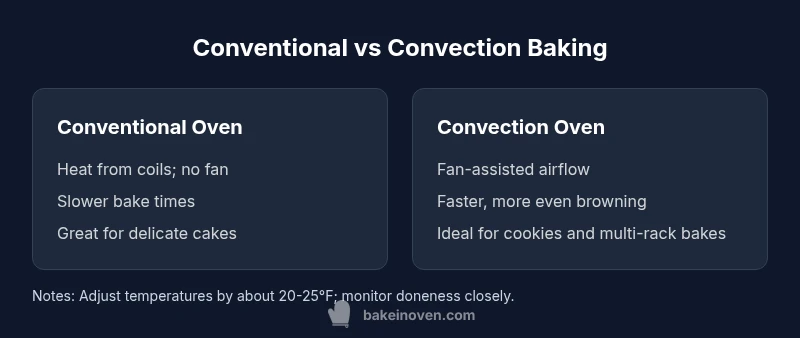
Convection ovens add a fan and exhaust system that moves hot air around the cavity. This forced air delivers more uniform heat, reduces surface moisture, and promotes even browning across multiple racks. The phenomenon is twofold: faster surface drying helps set crusts and cookies develop edge caramelization more quickly, while the overall temperature distribution becomes less dependent on exact rack position. For bakers, the main implication is that airflow can turn a good bake into an excellent one, provided you adjust temperature and timing to account for the enhanced heat transfer.
When Convection Delivers Real Benefits: Cookies, Pastries, and Sheet Cakes
In real-world baking, convection shines when you bake large volumes or aim for consistent results across a batch. Cookies bake with crisper edges and uniform centers because the hot air reaches every surface more evenly. Puff pastries benefit from rapid moisture loss at the surface, promoting distinct flaky layers. Sheet cakes and brownies often finish sooner with even browning, minimizing the need to rotate pans. Bake In Oven analysis shows noticeable time reductions and more consistent texture in these categories, especially on multiple racks. The takeaway is clear: convection is a strong fit for batch baking and high-output scenarios.
When Convection Can Be Tricky: Delicate Cakes, Custards, and Small Bakes
Not every bake benefits from forced air. Delicate sponge cakes, soufflés, and custards rely on gentle, stable heat to rise and set properly. The fan can introduce uneven texture if left unchecked or if pan placement is inconsistent. Small items like cupcakes or muffins can brown too quickly on top while remaining underdone inside if airflow is too aggressive. In these cases, starting with conventional bake and switching to convection for finishing or using a lower fan-assisted setting can yield best results. Bake In Oven Team emphasizes recipe-specific testing rather than blanket rules.
Temperature and Time: Making Reliable Adjustments
A practical rule of thumb is to reduce the oven temperature by about 20–25°F (roughly 10–15°C) when using convection, and to begin checking for doneness earlier than you would with conventional heat. Some bakers prefer lowering bake times while others adjust both time and temperature in small increments. Since oven performance varies by model and even by recipe batch, running a test bake with a spare tray is wise before committing to a large batch. Keeping a simple log of temperature, time, and outcomes builds a personal calibration over time.
Practical Tips: Setup, Racks, and Preheating
Preheat to the standard recipe temperature, then switch to convection if your oven supports a dedicated convection setting. If not, enable the fan after the oven reaches temperature. Use rimmed baking sheets to promote airflow and prevent pan warping, and arrange pans with space between them on middle racks for even circulation. Rotate trays if you bake on a single rack, and monitor foods that release moisture closely. The goal is consistent browning without over-drying, which requires practice and careful note-taking. Bake In Oven highlights that documenting tweaks accelerates mastery.
Energy Use, Costs, and Efficiency: What the Numbers Say
Convection can shorten bake times and potentially reduce energy usage on multi-batch days, but the total savings depend on your cooking habits and oven efficiency. Bake In Oven analysis indicates that energy impact is often incremental for typical home bakers, with larger gains when you bake frequently across multiple trays. Shorter cycles also reduce overall heat exposure to your kitchen. When evaluating a convection upgrade, weigh upfront costs against expected usage and the value of time saved in your routine.
Real-World Decision Guide: Should You Switch to Convection?
If your routine includes batches of cookies, pastries, or roasted vegetables, convection is worth trying. If you often bake delicate cakes that rely on gentle heat, keep conventional heat in your toolkit and reserve convection for finishing or bulk baking. Start with two trusted recipes, compare texture and color, and keep notes to guide future adjustments. The best decision aligns with your bake variety, frequency, and the level of batch consistency you want to achieve. Bake In Oven recommends a measured, progressive transition.
Quick-Start Decision Checklist: Is Convection Right for You?
- Do you bake multiple trays at once or need speed? If yes, convection is likely beneficial.
- Do you bake delicate cakes or custards that rely on gentle heat? If yes, you may prefer conventional heat for that recipe.
- Is your oven reliable across multiple racks without hot spots? If yes, convection will offer more consistent results.
- Will you invest time to calibrate temps and keep notes? If yes, you can maximize the advantages of convection.
Comparison
| Feature | Conventional Oven | Convection Oven |
|---|---|---|
| Heat distribution | Coil- or element-driven, results vary by rack and placement | Forced air circulation for even browning across racks |
| Bake time & temperature guidance | Standard times/temps per recipe | Typically 20–30% lower temperatures and shorter times |
| Best uses | Delicate cakes, traditional bakes, crust development without rapid drying | Cookies, pastries, sheet cakes, roasts with even browning |
| Energy use | Depends on recipe and duration | Often shorter cycles can reduce total energy use |
| Ease of learning | Familiar for most bakers | Requires calibration and careful rack placement |
Benefits
- Faster bake times and more even browning
- Better for multi-rack baking and batch consistency
- Potential energy savings with shorter cycles
- More versatile across a range of recipes
Negatives
- Not ideal for very delicate bakes without adjustments
- May require recipe-specific testing and notes
- Can cause over-browning if misused on some dishes
Convection wins for batch baking and speed; conventional remains best for ultra-delicate or yeast-leavened cakes
Choose convection when you bake in batches or want faster, even browning. Use conventional heat for delicate pastries and cakes that rely on gentle, uniform rise.
Frequently Asked Questions
Is convection bake worth it for most home bakers?
For most home bakers, convection is worth trying, especially if you bake on multiple trays and want quicker, more even browning. However, some recipes may perform better with conventional heat, so start with a controlled test.
Yes, convection is worth trying for most home bakers, especially for batches and cookies. Start with a test recipe to see how your oven behaves.
What temperature adjustments are recommended when using convection?
A common recommendation is to reduce the recipe temperature by about 20–25°F (10–15°C). Start checking doneness earlier and adjust based on your oven model and the batch size.
Reduce by about 20 to 25 degrees and monitor early for doneness.
Can I bake delicate cakes with convection?
Delicate cakes may rise unevenly or dry on the surface under convection. If you choose to bake them this way, test a small batch, use lower fan settings if available, and consider finishing with conventional heat.
Delicate cakes can be tricky with convection; test first and adjust accordingly.
Does convection save energy in home baking?
Shorter bake times can reduce energy use, but savings depend on how often you bake and the efficiency of your appliance. Consider your overall baking pattern when evaluating cost savings.
Shorter times can save energy, especially with frequent baking.
When should I not use convection?
Avoid convection for very delicate or layered items that rely on gentle heat for rise, such as certain sponges or custards. Also, use caution with small items where airflow may cause uneven browning.
Avoid convection for delicate, tall, or custard-based bakes when possible.
How should I calibrate my convection oven over time?
Keep a simple bake log noting temperatures, times, and outcomes. Recalibrate after any oven service or using a new rack arrangement and adjust future batches accordingly.
Log temps and results to fine-tune your convection settings.
Key Takeaways
- Start with convection for batch baking to test efficiency
- Calibrate temps by reducing 20–25°F and check doneness early
- Reserve convection for cookies, pastries, and roasts
- Keep a baking log to track adjustments