Bake vs Convection: A Practical Guide for Home Bakers Today
Analytical guide to bake vs convection ovens, explaining heat distribution, airflow, and timing. Learn when to use each mode for cakes, cookies, pastries, and roasts with practical tips from Bake In Oven.


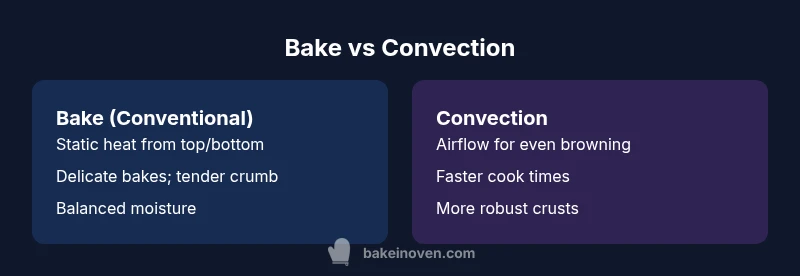
Bake vs convection ovens represent two distinct heat delivery methods in home baking. Conventional bake relies on static heat from top and bottom elements, while convection adds a fan and exhaust to circulate hot air for more even browning. For most home bakers, convection excels at roasting and crisping, while traditional bake preserves tenderness in delicate cakes and soufflés. When in doubt, start with conventional bake for delicate items and switch to convection for items that benefit from browning and speed.
What is bake vs convection? The core concepts behind oven modes
In everyday kitchens, the question what is bake vs convection often comes up when cooks start optimizing texture, browning, and timing. Bake, or conventional baking, uses heat radiating from stationary elements at the top and bottom of the oven. There is minimal air movement, and the heat transfer relies on radiant heat and natural convection. Convection ovens add a built-in fan and an exhaust system to actively circulate hot air around the food. This airflow accelerates heat transfer, promotes more uniform cooking, and typically shortens cooking times. For home bakers, understanding what is bake vs convection is a foundational step toward predictable results across a range of dishes. Bake In Oven emphasizes that the difference is not just a toggle switch; it’s a mechanism that changes moisture loss, crust formation, and even crumb structure. Throughout this guide, the focus remains practical: how to choose the mode that yields your desired texture without wasting ingredients or energy.
How convection modifies heat transfer and why it matters
When a fan pushes hot air around the oven cavity, the boundary layer of cooler air near the surface is reduced. The practical effect is faster heat transfer, more even temperatures, and improvements in browning on exposed surfaces. For what is bake vs convection, this means that convection helps create crisper exteriors on pastries and roasts without overcooking inner portions. It also means less reliance on rotating pans and less risk of hot spots. Bake In Oven’s analysis confirms that the airflow helps maintain uniform temperatures across the rack, which is particularly helpful for air-laden items like cookies and pastries. The key takeaway is that convection is not just about speed; it’s about controlled, repeatable browning and texture.
How conventional bake works and when it shines
In traditional bake mode, heat rises from the bottom and sides in a relatively static pattern. The lack of forced air can lead to slight hot spots, particularly in older ovens or racks with multiple pans. This mode is ideal for recipes where you want the interior to set gently before the exterior browns, such as delicate sponge cakes, soufflés, or custards. Traditional bake helps conserve moisture in certain baked goods, reducing the risk of drying out more fragile textures. For breads and layered cakes, conventional bake often yields a uniform crumb when the oven’s heat is distributed evenly and pans are properly spaced. Bake In Oven notes that mastering bake mode requires adjusting rack position, pan material, and preheating routines to unlock consistent results.
When conventional bake is best: recipes that benefit from tenderness and even crumb
Certain recipes depend on gentle, steady heat to avoid collapsing delicate structures. What is bake vs convection guides bakers to lean toward conventional bake when preparing sponge cakes, delicate tarts, and soufflés. The absence of intense airflow reduces rapid moisture loss, helping product steam internally as needed. In these cases, preheating remains crucial to minimize temperature lag, and the bake mode can be paired with glass or light-colored pans to reduce excessive browning while the interior sets. Bake In Oven’s practical approach to this mode emphasizes patience: allow proper heat distribution before introducing batter and resist the temptation to open the door mid-bake, which can chill the interior and throw off the timing.
When convection truly shines: roasting, cookies, and high-heat tasks
Convection is often the go-to for tasks that benefit from quick heat transfer and surface browning. What is bake vs convection becomes most apparent in roasting vegetables, poultry, and meats, where a crisp exterior and even cooking improve texture and flavor. For cookies and sheet cakes, convection can promote uniform browning and faster bake times, provided the temperature is adjusted and pans are positioned to avoid overcrowding. The Bake In Oven method favors checking early and rotating pans to maximize uniformity in a shared bake space. In this mode, air movement helps evaporate moisture from surfaces, creating browned edges without scorching the centers.
Temperature and time adjustments: rules of thumb for home ovens
A practical guideline for what is bake vs convection is to reduce the oven temperature by about 25°F (14°C) when using convection, and to monitor cooking times closely as air circulation can shorten bake times. However, many recipes provide explicit convection instructions, so rely on those when available. If you are adapting a conventional bake recipe to convection for the first time, start by lowering the temperature and checking a few minutes earlier than the original time. Bake In Oven suggests maintaining even spacing and avoiding overcrowding to ensure air can circulate freely around each item. These adjustments help you maintain moisture where needed while achieving the desired surface texture.
Size, pans, and vessel choices: how equipment interacts with modes
The impact of bake vs convection is also influenced by the choice of pan and rack. Dark pans can absorb more heat and brown faster, which might be amplified under convection. Light-colored or glazed pans reflect heat more evenly and can counterbalance the intensified heat in convection mode. For recipes that rely on a gentle rise, such as delicate cakes, conventional bake often yields a more controlled crumb. In contrast, for roasted vegetables or crispy cookies, convection supports rapid surface dehydration and crispness. Bake In Oven’s guidance emphasizes experimenting with one variable at a time—switching between modes in small steps while keeping the rest of the recipe constant.
Practical examples: how to approach common baking tasks with each mode
When baking shortbread, conventional bake tends to preserve tenderness and crumb because there is less air movement to dry out the dough. Conversely, chocolate chip cookies can benefit from convection’s even heat, which promotes uniform spreading and browning. For cakes, a hybrid approach can work: begin with a conventional bake to ensure the structure sets, then switch to convection during final browning if your oven permits mode-specific temperature toggling. For roasts and vegetables, convection excels at crisping surfaces and finishing with a caramelized exterior. The key is to plan a few test runs to calibrate your oven’s quirks and document your results for future bakes.
Practical workflow: building confidence with bake vs convection in your kitchen
To gain confidence, start with simple recipes you know well, and vary only the mode between tests. Keep a log of temperatures, rack positions, pan materials, and outcomes. This approach aligns with Bake In Oven’s method: you learn by comparing texture, moisture, and browning across modes. Pay attention to moisture loss and crust development, and adjust temps or rack heights to maintain the balance you want. As you accumulate data from several trials, you’ll understand how your oven behaves under bake vs convection and can optimize it for different recipes with consistent results.
Comparison
| Feature | Bake (Conventional) | Convection Oven |
|---|---|---|
| Heat distribution | Static heat from top/bottom elements; limited air movement | Active air circulation via fan/exhaust for even heat |
| Best uses | Delicate cakes, soufflés, custards; tender crumb | Roasting, cookies, pies; crisp edges and even browning |
| Preheating behavior | Standard preheat; slower response to temperature changes | Faster preheat; quicker setup for mid-bake adjustments |
| Temperature adjustment | Follow recipe at stated temperature | Typically reduce by ~25°F (14°C) unless recipe specifies otherwise |
| Moisture outcomes | Higher moisture retention in some delicate bakes | Airflow can dry exposed surfaces; monitor moisture loss |
| Best practices | Use light-colored pans; avoid overcrowding; rotate pans if needed | Space evenly; lower rack for even browning; use parchment as needed |
Benefits
- Faster overall cooking times with convection
- More even browning and crust formation
- Better air circulation reduces hot spots in the oven
- Improved efficiency for large batches and roasted foods
- Less manual pan rotation required in some setups
Negatives
- Not ideal for very delicate baked goods
- Can dry out moisture and cause cracks if misused
- Requires temperature adjustments and recipe adaptation
- Some recipes depend on static heat for proper rise
Convection is generally versatile and advantageous for roasting and browning, while conventional bake remains preferred for delicate bakes.
Choose convection for most savory and crusty outcomes, but reserve conventional bake for tender cakes and fragile pastries. With practice, you’ll know when to switch modes for consistent results.
Frequently Asked Questions
What is bake vs convection, and which is better for most recipes?
Bake vs convection describes two heat delivery methods. Convection uses a fan to circulate hot air for even cooking and faster browning; conventional bake relies on radiant heat with less air movement. Neither is universally better; choose based on texture goals and the recipe.
Bake vs convection are two oven modes. Convection moves hot air for even cooking, while conventional bake uses standing heat. The best choice depends on whether you want faster browning or a tender crumb.
Should I reduce temperature when using convection?
Yes. A common guideline is to reduce the recipe temperature by about 25°F (14°C) when using convection, unless the recipe specifies otherwise. Also monitor progress and test early.
Yes. Typically drop the temperature by about 25 degrees and watch the bake closely the first few times.
Can I bake everything in convection mode?
Most things can be baked in convection, but delicate items like sponge cakes or soufflés may suffer from rapid moisture loss and collapse. Use conventional bake for those, or follow a tested recipe that specifies convection.
Most things work in convection, but delicate bakes may need conventional bake for tenderness and moisture.
How do I convert baking times for convection?
Start by reducing the time by 5-15 minutes or checking earlier than the original time. Every oven behaves differently, so rely on visual cues and a thermometer when appropriate.
Check earlier than the recipe says and use a timer. Oven behavior varies, so test and adjust.
Do I need to preheat convection ovens?
Yes, preheating is recommended to ensure the fan circulates hot air from a stable temperature, giving even results from the start of baking.
Preheat to ensure even heat distribution from the first minute.
What is true convection, and how is it different from standard convection?
True convection uses a dedicated heating element near the fan to deliver more uniform heat compared with standard convection. This can improve evenness and reduce hot spots in larger ovens.
True convection adds a dedicated heater and fan for more uniform heat than standard convection.
Key Takeaways
- Know your oven's mode options and their effects on texture
- Adjust temperature by about 25°F when using convection
- Space pans to maximize air circulation for even results
- Use conventional bake for delicate baked goods, convection for browning and speed
- Keep a simple log of tests to optimize mode selection over time