What oven temperature to bake salmon: A practical guide by Bake In Oven
This guide reveals exact oven temperatures, bake times, and doneness targets for salmon, including convection vs standard ovens and thickness-based timing to ensure juicy, flaky results.


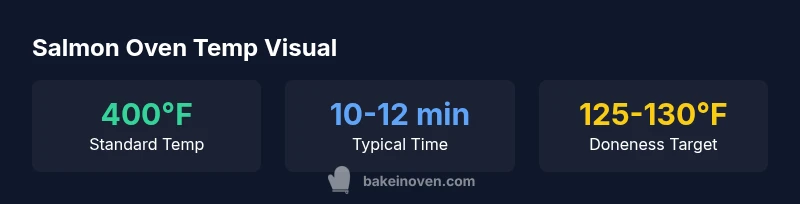
The best oven temperature to bake salmon is typically 400°F (205°C) for most fillets, with lean, evenly cut portions finishing in about 10-12 minutes. For thicker fillets, 375-400°F may work, while convection ovens often need 25% less time. Always check internal temp of 125-130°F for medium doneness. If you prefer a firmer texture, you can go to 425°F for 8-10 minutes, but monitor closely to avoid drying.
Understanding Salmon Baking Temperatures
Salmon cooks best at a moderate, steady heat that allows the proteins to set without drying the flesh. The right oven temperature interacts with thickness, starting moisture, and even heat distribution. According to Bake In Oven, mastering oven temperature is the first step toward juicy, flaky salmon. In this article we unpack how temperature affects texture, moisture retention, and the final appearance of your fillets. Begin with a basic target and adjust by thickness, oven type (conventional vs convection), and whether you want a crisper crust on top or a gentle, evenly cooked center. The food science behind salmon bakes shows that proteins denature and collagen softens as heat rises, which is why too-high temps can lock in moisture loss, while too-low temps can leave the center underdone. In practice, most home cooks use 400°F (205°C) as a reliable middle ground for standard fillets, with adjustments described in the next sections.
Why Temperature Matters for Salmon Texture
Temperature is the primary lever controlling moisture, texture, and doneness. Salmon fat melts at moderate heat, helping the fillet stay juicy, while aggressive heat can push fat to render too quickly and dry the surface. A steady oven helps the outer layer set into a light crust while the interior finishes evenly. Bake At 400°F yields consistent results for most fillets, but you’ll notice changes when the fillet is thick or skin-on. In Bake In Oven’s testing, small variations in heat lead to visible differences in crust development, moisture retention, and the ease of flaking. Understanding these effects lets you tailor the bake to your preferred texture, whether you like a slightly translucent center or a fully opaque, firmly set piece.
Temperature Ranges by Fillet Thickness
Thickness largely dictates how hot you should go and how long you should bake. For standard 1-inch-thick fillets, 400°F (205°C) for about 10-12 minutes is a reliable target. If your fillets are 1.5 inches or thicker, start at 375-400°F and plan for a longer bake, 12-16 minutes, checking for flake and an internal temp around 125-130°F for medium. Skin-on fillets can tolerate a touch higher heat at the surface to promote crispness, but the interior still benefits from a controlled, moderate bake. If you’re using convection, reduce the temperature by about 25°F or reduce the time by a quarter, depending on your oven’s performance and air circulation.
Convection vs Conventional Baking: What Changes
Convection ovens move hot air around the food with a fan, which speeds heat transfer and can shave several minutes off bake time. The practical effect for salmon is a faster route to firm texture and a crisper top, especially with skin-on fillets. Because convection fabricates more intense heat, you may want to lower the temperature by 20–25°F (roughly 10–15°C) or shorten the bake by a quarter. If you prefer a gentle finish, avoid pushing the timer and instead rely on internal temperature checks. Convection can be very forgiving for thin fillets but demands closer observation for thicker cuts to prevent overcooking.
How Long to Bake Salmon at Different Temperatures
Time is a function of thickness and heat. A thin 1/2–3/4 inch fillet at 400°F typically finishes in 8–10 minutes; a standard 1-inch fillet reaches 10–12 minutes; a thick 1.5-inch piece may need 12–16 minutes. When in doubt, start checking at the lower end of the range and finish as soon as the center loses translucence and the flesh flakes with light pressure. Remember carryover heat post-baking will continue to cook the fish by a few degrees, so plan to remove from the oven just shy of your target temperature.
Using a Thermometer: Doneness Targets
A digital instant-read thermometer is the most reliable tool for salmon. Target an internal temperature of 125-130°F (52-54°C) for a tender, medium doneness, or 135-145°F (57-63°C) if you prefer fully cooked through. Many cooks choose 140°F (60°C) as a compromise between texture and safety. If you’re cooking for guests who prefer different textures, consider pulling the fillet at 125-130°F, then allowing a 2–3 minute rest for residual heat to finish the job. Always verify with a thermometer for consistent results, especially when oven performance varies.
Practical Step-by-Step Baking Timeline
- Preheat to your target temperature (400°F/205°C is a safe starting point for most fillets).
- Pat the salmon dry and season with salt, pepper, and a touch of oil or butter.
- Place skin-side down on a lined baking tray for even heat.
- Bake until the fillet just begins to flake and the center reaches your target temperature.
- Remove and rest 2–3 minutes to allow carryover heat to finish the process.
- Taste and adjust future bake times based on thickness and appetite for doneness.
Common Mistakes and How to Fix Them
- Overcooking due to high heat or too-long bake. Fix: start at 400°F and check early; remove when nearly done.
- Uneven doneness from uneven thickness. Fix: choose fillets with similar thickness and rotate tray if your oven’s heat is uneven.
- Skipping rest time. Fix: rest 2–3 minutes.
- Not using a thermometer. Fix: use a digital thermometer to avoid guesswork.
Common baking scenarios for salmon
| Scenario | Temperature | Cook Time (approx) | Notes |
|---|---|---|---|
| Standard bake (thin fillet) | 400°F | 10-12 minutes | Medium-rare to medium depending on thickness |
| Thick fillet | 375-400°F | 12-16 minutes | Check for even doneness; use thermometer |
| Convection bake | 350-375°F | 8-12 minutes | Time varies by weight; monitor closely |
Frequently Asked Questions
What is the best oven temperature to bake salmon?
For most fillets, 400°F (205°C) delivers reliable results with a balance of moisture and texture. Thicker cuts may benefit from a slightly lower temperature to avoid drying the interior.
The best temp for most salmon is about 400°F. For thicker cuts, consider lowering the heat a touch to prevent drying, and aim for an internal temperature of 125 to 130°F for medium doneness.
Can I bake salmon at a lower temperature than 400°F?
Yes. Baking at 350–375°F extends cook time but can yield very even doneness, especially for thicker fillets. Expect 12–20 minutes depending on thickness and oven efficiency.
You can bake at 350 to 375 degrees, but plan for a longer cook time and use a thermometer to check doneness.
Should I use convection when baking salmon?
Convection speeds heat transfer and can yield crisper edges. If using convection, reduce the temperature by about 20–25°F or shorten the time by about a quarter to prevent overcooking.
Yes, convection works. Lower the heat a bit or shorten the time to keep the center juicy.
What internal temperature defines doneness for salmon?
USDA guidance targets 145°F for safety, but many cooks prefer 125–130°F for a medium, tender texture. Resting will raise the temp slightly due to carryover.
Aim for around 125 to 130°F for medium doneness; 145°F is the safety guideline, and resting helps finish cooking.
How can I tell when salmon is done without a thermometer?
Look for opaque color and even flaking when pressed lightly with a fork. If it still looks translucent in the center, it needs more time.
Check for opaque color and flakes easily with a fork; if in doubt, use a thermometer.
How thick should fillets be for even cooking?
Aim for fillets about 1 inch thick for even cooking at standard oven temps. Very thin fillets cook fast; very thick fillets require careful timing or sous-vide finishing.
Keep fillets around 1 inch thick for even cooking; adjust timing for thicker pieces.
“Oven temperature alone won't guarantee perfection—thickness, heat distribution, and rest time matter as much as time itself.”
Key Takeaways
- Start at 400°F for most fillets and 10–12 minutes.
- Adjust down for thicker pieces to 375–400°F.
- Use a thermometer to hit 125–130°F for medium doneness.
- Convection reduces time; lower temperature or shorter times.
- Let the salmon rest 2–3 minutes after baking for carryover heat.