What Temperature to Bake Whole Chicken At: A Practical Guide
Learn the right oven temperature, cooking times by weight, and proven tips to roast a juicy, flavorful whole chicken. Includes doneness checks, safety guidance, and flavor boosters for perfect results every time.


Roast a whole chicken at 375°F (190°C) for about 20 minutes per pound, until the thickest part reaches 165°F (74°C). For crispy skin, pat dry, oil lightly, and finish with a 10–15 minute rest before carving. Convection can reduce time slightly; adjust as needed.
Why Temperature Matters for Whole Chicken
Roasting a whole chicken to juicy, evenly cooked meat starts with selecting the right oven temperature. Temperature affects skin crispness, browning, and the rate heat penetrates to the center. Too high a temperature can scorch the outside before the inside finishes; too low can leave the meat pale and soggy. For most home ovens, a moderate roast of 350-375°F (177-190°C) yields reliable results, with 375°F often giving a balanced skin and moisture. In this section we explain the trade-offs and provide a clear framework to decide your target temperature based on bird size, skin preference, and oven type (conventional vs. convection). We also discuss how preheating, rack placement, and pan choice influence heat distribution. Bake In Oven's approach emphasizes consistent heat and a short rest period to maximize juiciness after roasting. Keep in mind your oven's calibration matters—two ovens labeled 375°F can deliver noticeably different results. If you crave ultra-crispy skin, you may opt for a higher end of the range for the final minutes, but be prepared to monitor browning closely to prevent burning.
Temperature Range Options: 350°F, 375°F, and 400°F
Choosing a roasting temperature is a trade-off between speed, moisture, and texture. 350°F (177°C) is gentler on lean meat and yields a softly browned skin with fewer roast hotspots, but it requires longer cooking and careful doneness checks. 375°F (190°C) is the most versatile middle ground; it delivers reliable browning while staying moist. 400°F (204°C) increases browning and can lead to crisper skin quickly, but it raises the risk of overcooking the breast before the thighs finish. If you’re cooking a smaller bird (3 pounds or less), 375°F is usually enough; for larger birds (5 pounds or more), you might prefer 375–400°F and plan for the extra minutes. For home ovens with weak heat distribution, consider starting at 350°F for the first 20 minutes, then finishing at 375°F to 400°F to brown. Always preheat fully before the chicken goes in and keep the oven door closed during roasting to maintain stable temperature.
Conventional vs Convection: What Changes?
Conventional ovens heat by radiant heat from the walls and bottom, which can create hot spots and slower browning on the breast. A convection oven uses a fan to circulate hot air, speeding up the cooking process and promoting even browning. When using convection, reduce the temperature by about 25°F (14°C) and monitor the chicken closely. The same weight will finish sooner in a convection oven, sometimes 20–30 minutes earlier for a typical 4-pound bird. If your oven lacks a convection setting, rely on a longer roasting time at 375°F with a close eye on browning, and consider finishing under the broiler for crisp skin. No matter the method, use a reliable meat thermometer and verify 165°F at the thickest part.
Doneness and Weight: 3–4 lb, 4–5 lb, and Beyond
Doneness isn’t one-size-fits-all. A typical 3–4 pound chicken roasted at 375°F will take roughly 60–75 minutes in a conventional oven, but you should rely on internal temperature rather than time alone. A 4–5 pound bird often needs 75–95 minutes; a 5–7 pound chicken may require 95–115 minutes depending on oven stability and breast thickness. Always measure temperature in the thickest part of the thigh (not touching bone) and aim for 165°F (74°C). Juices should run clear when the leg is pierced, and the breast should be lightly pink near the bone; if you see a lot of pink, give it a few more minutes and recheck. For extremely large birds, consider spatchcocking to shorten cooking time and improve evenness.
Preparing the Bird: Drying, Seasoning, and Prep
Patting the chicken dry is one of the simplest ways to improve skin crispness. Remove giblets, rinse if desired, then pat thoroughly with paper towels. Liberally season the cavity with salt and aromatics (garlic, lemon slices, herbs) and rub the outside with olive oil or melted butter. Salt the skin generously; the moisture drawn to the surface will help with browning. If you have time, air-drying uncovered in the fridge for an hour or two helps skin crisping during roasting. Truss the legs and tuck the wings to prevent over-browning at the tips. Place the chicken on a wire rack set in a rimmed sheet pan so air can circulate and fats can drain away from the meat.
Step-by-Step Roasting Plan
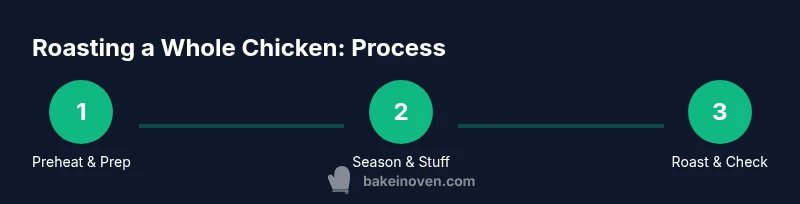
- Preheat oven to 375°F (190°C) and prep the bird. Remove giblets, pat dry, and set on a rack in a roasting pan.
- Season inside and out and lightly brush with oil or melted butter; slide lemon slices and herbs under the skin for extra flavor.
- Truss the legs and tuck the wings to promote even cooking and prevent scorching.
- Place in the center of the oven and roast until the thigh thermometer reads 165°F (74°C).
- If the breast browns too quickly, tent with foil and finish more slowly to preserve moisture.
- Rest the chicken 10–15 minutes before carving to allow juices to redistribute.
Pro tip: Plan for resting to redistribute juices; a little undercooking at the tail end can ensure juicy results.
Resting and Carving: Juiciness Preservation
Resting is essential after roasting. It allows juices to redistribute from the center toward the surface, making carving easier and the meat juicier. A 10–15 minute rest under tented foil is usually enough for a 3–5 pound bird. During resting, the internal temperature may climb a few more degrees, so avoid overcooking. Once rested, carve along the breastbone and separate the legs before serving; cut against the grain for maximum tenderness.
Flavor Variations and Finishes
Enhance flavor with a compound butter under the skin: softened butter mixed with garlic, herbs, and lemon zest. You can also rub the outside with paprika for a warm color, or use a spice blend that suits your meal. For finishing touches, squeeze fresh lemon over the finished bird and sprinkle chopped herbs. If you crave extra crispness, broil on high for 1–2 minutes at the end, watching closely to prevent burning.
Troubleshooting: Common Issues and Fixes
If the skin isn’t crisp enough, increase oven temperature or finish under the broiler for a minute or two, keeping a close eye on browning. If the meat is pink near the bone after resting, it may still be safe if the thermometer reads 165°F in the thickest thigh; otherwise return to the oven for a short time. For an uneven cook, use a rack so heat can circulate and rotate the pan halfway through roasting. Finally, always verify doneness with a reliable thermometer and allow the chicken to rest before carving.
Tools & Materials
- Whole chicken (3–7 lb)(Choose a bird of uniform weight if possible)
- Olive oil or melted butter(For skin crispness and flavor)
- Salt and pepper(Season inside and out)
- Garlic, lemon, and fresh herbs(Optional aromatics for cavity and under skin)
- Roasting pan with rack(Elevates chicken for even heat)
- Meat thermometer(Probe into thickest thigh (avoid bone))
- Kitchens twine (for trussing)(Ties legs and secures wings)
- Parchment paper or foil(Line pan or tent skin if browning too fast)
- Timer(Track cooking progress and resting time)
Steps
Estimated time: 2 hours 15 minutes
- 1
Preheat and prep
Preheat the oven to 375°F (190°C) and prepare the bird by removing giblets, patting dry, and setting it on a rack over a roasting pan. This ensures even heat exposure from the start and helps crisp the skin.
Tip: A completely dry surface yields crisper skin. - 2
Season inside and out
Rub the cavity with salt and insert aromatics if using. Brush the outside with oil or melted butter and season generously for depth of flavor and browning.
Tip: Season under the skin for deeper aromatics. - 3
Truss and position
Tie the legs together with kitchen twine and tuck the wings under the body to promote even cooking and prevent wing tips from burning.
Tip: Trussing helps the chicken cook evenly and retain moisture. - 4
Roast on a rack
Roast in the center of the oven until the thigh thermometer reads 165°F (74°C). Keep the oven door closed to maintain heat consistency.
Tip: Rotating the pan halfway can help even browning in some ovens. - 5
Adjust for browning
If the skin browns too quickly, tent with foil and continue roasting. Consider a brief convection finish if your oven has that option.
Tip: Foil tent prevents over-browning while the inside finishes. - 6
Rest and carve
Let the chicken rest 10–15 minutes before carving to allow juices to redistribute. Slice and serve with pan juices or a simple sauce.
Tip: Resting yields juicier, more flavorful meat.
Frequently Asked Questions
What temperature is best to bake a whole chicken?
A common, reliable temperature is 375°F (190°C). It provides good browning while keeping the meat juicy. You can adjust to 350°F for a gentler roast or 400°F for crisper skin, but monitor doneness closely.
Typically, 375°F gives a good balance of browning and juiciness. If you prefer crisper skin, you can go up to 400°F, but watch the meat closely.
How do I know when the chicken is done?
Check the thickest part of the thigh with a meat thermometer; it should reach 165°F (74°C). The juices should run clear, and the breast meat should be opaque, with no pink near the bone.
Use a thermometer in the thigh until it reads 165 degrees. Look for clear juices and opaque meat as signs of doneness.
Can I cook at 350°F or 400°F?
Yes. 350°F yields even cooking with slightly longer time; 400°F browns faster but risks overcooking the breast first. Adjust times accordingly and monitor with a thermometer.
You can roast at 350 or 400, but be sure to check internal temperatures and adjust time as needed.
Should I cover the chicken while roasting?
Uncovered roasting promotes browning and crisp skin. If the skin browns too quickly, loosely tent with foil to finish cooking without burning.
Roast uncovered for browning, and loosely tent with foil if it browns too fast.
Is spatchcocking better for even cooking?
Spatchcocking (butterflying) a chicken can reduce cooking time and promote even doneness. It’s especially helpful for larger birds.
Spatchcocking helps cook it evenly and a bit faster, especially for bigger birds.
What about frozen chicken?
Roasting from frozen is not recommended for best texture and safety. Thaw completely before roasting to ensure even heat.
Roast from thawed chicken for best results; don’t roast frozen poultry.
Watch Video
Key Takeaways
- Roast at 375°F (190°C) for a balanced result
- Always verify 165°F in the thigh with a thermometer
- Dry skin and rack placement improve browning
- Rest 10–15 minutes before carving
- Convection can reduce cook time slightly; adjust accordingly