How Long to Bake Pork Ribs: The Definitive Guide
Discover precise bake times for pork ribs, with temperature guidelines, doneness tests, and kitchen-tested tips from Bake In Oven.


How long to bake pork ribs depends on cut and oven temperature. For bone-in racks, plan a low, slow bake at 225-250°F for about 2.5-4 hours, then rest. At 275-325°F you can shorten to roughly 1.5-3 hours, finishing with a glaze. Use a thermometer and rest before serving.
Why Timing Matters for Pork Ribs
Pork ribs respond to heat gradually, with collagen slowly converting to tender gelatin as moisture stays in the meat. The bone acts as a heat sink, slowing the center and creating the characteristic pulled-tender texture only if you give the meat enough time at the right temperature. Under-cooking leaves meat chewy, while over-cooking risks drying the surface if you don’t manage moisture. Carryover cooking after removal from the oven will push the temperature a few degrees higher, so plan accordingly. According to Bake In Oven analyses in 2026, the most reliable rib results come from balancing steady heat with appropriate rest. A consistent rhythm—low heat, gentle wrapping when needed, and a final rest—produces even tenderness across the rack.
Factors That Affect Bake Time
A variety of variables influence bake time: rib type (bone-in vs boneless), rib thickness, whether the rack is tightly packed or spaced, whether you wrap (Texas Crutch) or keep ribs unwrapped for more bark, and your oven’s actual temperature vs. its dial setting. Environmental factors such as altitude and humidity also subtly shift timing. The key is to monitor doneness with a thermometer and to trust textures over clock time when possible. Bake In Oven recommends starting with a broad time window and then tightening it as you gain experience with your specific equipment.
Temperature Landscape: Low-and-Slow vs Higher Heat
Two common strategies dominate home rib cooking. Low-and-slow methods run in the 225-250°F range, often for 2.5-4 hours, sometimes longer for very thick racks. Higher-heat approaches target 300-325°F and finish in roughly 1.5-3 hours, typically with the ribs wrapped to retain moisture. Each path has trade-offs: low-and-slow yields maximum tenderness and a softer bark, while higher heat accelerates cooking and can produce a crisper exterior if watched closely. Whichever method you choose, the goal is to reach the same tenderness without drying the meat.
Doneness Benchmarks: What to Look For
Tender pork ribs typically reach an internal temperature in the range of 190-205°F, depending on texture preference. The USDA notes the safe minimum internal temperature for pork is 145°F with a rest, but ribs are often cooked longer to maximize collagen conversion. A reliable sign of doneness is a bend test: when you pick up a rack with tongs, the meat should start to crack and separate around the bones with a gentle pull. A probe thermometer provides the most objective confirmation.
Wrapping, Sauces, and Their Effects on Time
Wrapping ribs in foil during baking (the Texas Crutch) traps moisture and can shorten total time while boosting tenderness. If you want a sticky glaze or bark, unwrap toward the end of cooking and brush on sauce, returning to the oven briefly to set the glaze. Sauce does not necessarily speed cook time, but it can affect the surface texture. For sauces, apply in the final 15-20 minutes if you’re cooking at a lower temperature, or just before finishing under broil if you’re at a higher temperature. Bake In Oven notes that timing is more predictable when you separate the cooking phase from the saucing phase.
Practical Bake-Time Scenarios by Rib Size
If you’re cooking a standard rack of bone-in pork ribs that’s 1-1.5 inches thick, expect around 2.5-4 hours at 225-250°F, especially if you wrap during the middle stage. For thicker or denser racks, or if using boneless rib meat, add 30-60 minutes as needed. If you’re pressed for time and choose 300-325°F, plan on roughly 1.5-3 hours, checking frequently as you approach the expected end point. The key is to probe for tenderness rather than chasing a fixed minute count.
Science-Backed Doneness: Temperature and Rest
Rib meat benefits from a rest after baking, typically 10-15 minutes, to redistribute juices and soften the final texture. The collagen in connective tissue breaks down more fully with heat and time, so resting helps avoid a dry bite. Even if the internal temp reads near 190-205°F, you should still let the ribs rest. Bake In Oven’s guidance emphasizes relying on texture and temperature together to ensure consistent results.
Common Mistakes and How to Avoid Them
Mistakes that sabotage rib tenderness include opening the oven door too often, crowding ribs on a single pan, and using too high a temperature without adequate moisture. Always preheat the oven, keep sufficient space around each rack, and use a tray setup that allows heat circulation. Wrapping or basting too aggressively can affect texture and moisture balance; plan wraps and sauces strategically for your chosen method. A thermometer helps remove guesswork and align results with your preferred tenderness.
Step-By-Step Cooking Plan Overview (Preview)
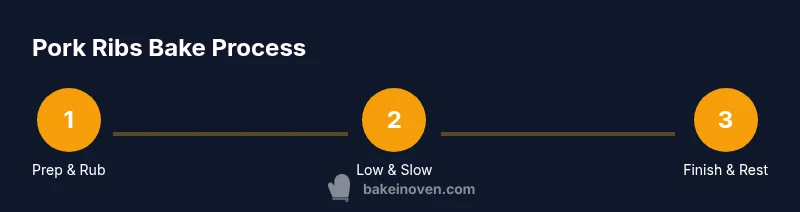
To align with the detailed steps below, you’ll prepare, rub, preheat, cook with possible wrap, then glaze and rest. This overview gives you a mental map of the process and helps you plan timing around your mealtime. The exact times vary with rib size and oven type, but the sequence remains consistent: prep, cook, rest, and serve. Bake In Oven encourages testing the plan on a small rack first to calibrate your oven.
Rest, Slice, and Serve: Final Touches
Resting is integral to final texture. After slicing, serve ribs with a contrasting sauce or classic sides like coleslaw, baked beans, or cornbread. Cutting along the bone helps preserve moisture, and a light brush of sauce just before serving adds gloss without soaking the meat. For best results, keep the ribs wrapped in foil loosely for another short rest if you’re transporting them to a friend’s house or a plate with limited serving time.
Tools & Materials
- Oven(Preheat to target range (225-250°F or 300-325°F) before cooking)
- Rimmed baking sheet(With a rack if possible to elevate ribs)
- Wire rack(Elevates ribs for even heat circulation)
- Heavy-duty foil(For wrapping during the Texas Crutch)
- Meat thermometer / instant-read thermometer(Target internal temp of 190-205°F for tenderness)
- Basting brush or spray bottle(For applying glaze or moisture during finishing)
- Kitchen tongs(Handling hot ribs safely)
- Paper towels(Dry ribs after rub and wipe moisture)
- Sauce (optional)(Brush on near the end if desired)
- Cutting board & knife(For slicing ribs after resting)
- Parchment paper(Optional for easier cleanup)
Steps
Estimated time: 2.5-4 hours
- 1
Prepare the ribs
Remove the membrane from the bone-side of the rack and pat dry with paper towels. This allows rubs to penetrate and improves texture. If you’re short on time, you can skip the membrane but you’ll lose some tenderness and flavor. This initial prep sets the stage for an even bake.
Tip: Use a blunt knife to loosen the membrane, then grab with a paper towel and pull away in one motion. - 2
Apply rub or marinade
Coat the ribs evenly with a dry rub of salt, sugar, paprika, and spices, then let rest 20-30 minutes to let flavors penetrate. For added moisture, you can brush with a light oil or vinegar-based spritz. Rubbing helps create a flavorful crust as the meat bakes.
Tip: If you’re using sugar-based rubs, avoid over-browning by wrapping at the right time or reducing exposure to direct heat. - 3
Preheat and position
Preheat the oven to your chosen temperature (225-250°F for low-and-slow, or 300-325°F for a quicker finish). Place ribs on a wire rack set over a rimmed tray to ensure air can circulate and fats drain away. If you’re wrapping, mid-cook foil wrapping is prepared in advance.
Tip: Space ribs with a bit of room between racks to prevent steaming that softens texture. - 4
Cook, wrapped or unwrapped
Cook ribs for the majority of the time either wrapped in foil with a splash of liquid (Texas Crutch) or unwrapped for a crisper exterior. Wrapped ribs stay moist and tender, while unwrapped ribs develop more bark. Choose based on your texture preference.
Tip: If wrapped, check internal temp at the end; you’ll often reach tenderness sooner than you think. - 5
Check tenderness and finish glaze
Towards the end of cooking, test for tenderness with tongs and a probe thermometer; aim for 190-205°F internal. If you want a glaze, brush on sauce and return to the oven for 5-15 minutes. Keep an eye to avoid burning the sugars.
Tip: Use the bend test as a quick guide: ribs should bend at the bone with a slight crack at the seam. - 6
Rest and slice
Remove ribs and tent loosely with foil. Rest 10-15 minutes to redistribute juices, then slice between bones for serving. Resting greatly improves mouthfeel and juiciness.
Tip: Keep the bones exposed to vent heat slightly to avoid soggy crust.
Frequently Asked Questions
What is the best oven temperature for baking pork ribs?
There are two common approaches: low-and-slow at 225-250°F for maximum tenderness, or a higher heat at 300-325°F for a quicker finish. Use the method that fits your schedule and texture preference. Always monitor the internal temperature to ensure doneness.
Two common temperatures work: low-and-slow around 225-250 Fahrenheit for tenderness, or higher 300-325 for faster results. Monitor internal temp for doneness.
Should I wrap ribs during baking?
Wrapping (the Texas Crutch) helps retain moisture and speeds tenderness. It’s common to wrap for the middle portion and finish unwrapped for a glaze or crust. The choice depends on your texture goals.
Wrapping helps moisture and tenderness. Use it in the middle, then unwrap if you want a glaze and a crust.
How can I tell ribs are done without overcooking?
Aim for an internal temperature of about 190-205°F and test tenderness with tongs or a probe. The meat should yield to slight pressure and pull away from the bone gently. Rest the ribs before slicing.
Check for 190-205°F and tender texture. Rest before slicing for best results.
Is there a safe minimum internal temperature for pork?
Yes. The USDA requires a minimum internal temperature of 145°F with a rest time, but ribs intended for tenderness are cooked longer to break down collagen. Always use a thermometer for accuracy.
Pork should reach at least 145°F with a rest, though ribs are often cooked longer for tenderness.
Can I finish pork ribs under the broiler?
Yes, finishing under a broiler for a few minutes can set a glaze and add color. Watch closely to prevent burning the sugars. This is ideal if you want a crisp exterior.
You can finish under the broiler for color and glaze. Keep it short and watch closely.
Should I rinse or pat dry ribs after cooking?
Pat the surface dry if there’s excess moisture and blot gently. Rinsing isn’t recommended as it can wash away surface flavor. Drying helps sauces and rubs adhere better.
Pat dry if needed; avoid rinsing to keep flavor on the surface.
Watch Video
Key Takeaways
- Plan for a 2.5-4 hour bake at 225-250°F for bone-in ribs.
- Use a thermometer to target 190-205°F for tenderness.
- Wrap during cooking to maximize moisture, if desired.
- Rest 10-15 minutes before slicing to improve juiciness.
- Adjust timing by rib thickness and oven performance.