Bake or Broil Nachos: An Analytical Comparison for Home Bakers
A Bake In Oven guide comparing bake vs broil nachos, focusing on texture, timing, toppings, and when to use each method to achieve crispy chips and melty cheese.


Defining Bake vs Broil for Nachos
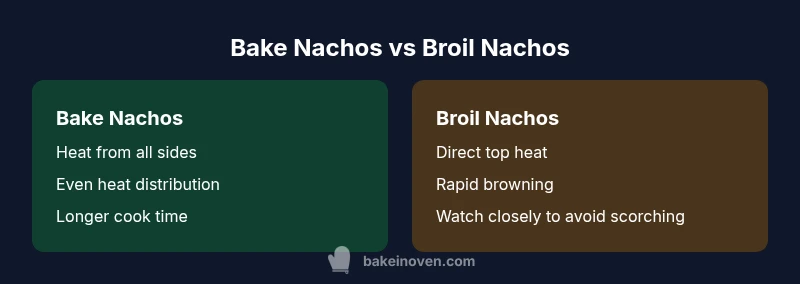
When home cooks set out to make nachos, two oven techniques typically come into play: bake and broil. Baking uses settled heat from all around the pan, sometimes with a convection fan, to heat the chips, cheese, and toppings gradually. Broiling uses intense, direct heat from the oven's top element, delivering rapid browning on the surface. Understanding these differences helps you predict texture: baking tends to create a stable, evenly warmed plate with melted cheese woven through toppings; broiling finishes with sharp edge crispness and a quick top-browning effect. In practice, most nacho experiments benefit from a combined approach: bake first to heat through, then finish under broil for a professional-looking, crispy top. This method minimizes soggy bottoms and uneven cheese pools while preserving toppings' integrity. Throughout this guide, we reference the phrase bake or broil nachos to remind you that the choice matters for texture, flavor, and service speed. According to Bake In Oven, mastering these oven techniques is essential for consistently delicious nachos at home. The Bake In Oven team found that a brief, controlled broil at the end can elevate even a simple cheese blend, producing a glossy, tactile crust on the top layer while the chips beneath stay firm. As you read, keep this strategic mindset: select the method that best suits your cheese, toppings, and timing constraints.
Texture Dynamics: Chip Crispening, Cheese Melt, and Toppings
Texture is the heart of nachos, and bake vs broil strongly influences texture outcomes. Baking uses steady heat to drive moisture out gradually and encourage even cheese integration, which helps prevent nightmare scenarios like soggy bottoms or pooled cheese that never fully sets. The result is a plate where the chips remain crisp around the edges while the cheese and toppings stay cohesive across the surface. Broiling, by contrast, unleashes a burst of top heat that browns cheese quickly and creates ultra-crisp edges on the outer chips. This approach is excellent when you want a dramatic finish and a short window to plate. To maximize both worlds, many cooks start with a shallow bake to heat through and soften the toppings, then switch to a quick broil to achieve a glossy cheese melt and a crisp crown. The Bake In Oven team notes that controlled top browning under broil can make even modest cheese blends look restaurant-perfect, while still preserving the structure of the chip layer beneath. Bake or broil nachos becomes less about a single method and more about a sequence that yields consistent texture across a crowd.
Timing and Temperature Guidelines
Timing and temperature are the practical levers that separate success from nacho chaos. Bake-based cooking relies on a moderate oven temperature and a longer exposure, which helps chips crisp without burning toppings. Broiling uses high heat from above and requires careful attention because the window for achieving perfect browning is short. A common, reliable approach is to bake at a moderate oven setting long enough to heat through, then switch to the broil setting for a brief finish. This two-step method supports even cheese distribution while delivering a crisp top layer. Bake tends to be more forgiving for larger trays and dense toppings, whereas broil shines when you want a fast, golden finish on a smaller, more focused surface. Bake or broil nachos should be chosen with your tray size, topping density, and time constraints in mind. When applying these principles, ensure your oven rack is positioned to balance heat exposure and monitor closely during the finish under broil to prevent scorching.
Toppings and Layering for Best Results
Layering matters as much as heat in nachos. A well-structured stack starts with a thin, even base layer of chips on parchment or a rimmed sheet pan. Add a light sprinkle of cheese, followed by toppings that release minimal moisture (cooked beans, olives, peppers) and then another chip-cheese-topping cycle. This layering helps each bite heat evenly in bake mode and supports topping integrity during broiling. Avoid dumping a lot of watery toppings on top; moisture can steam chips, preventing crisping. If you want achieve maximum melty cheese without soggy toppings, a light cheese layer between layers reduces moisture transfer and promotes even browning. The Bake In Oven team emphasizes that preparation matters as much as technique: choose toppings that align with your heat plan, and consider parchment for easy cleanup. Bake or broil nachos becomes a matter of how you stack, not just how you heat.
Equipment and Setup: Pans, Racks, and Positioning
Your gear decisions influence the final texture as much as heat. A sturdy rimmed baking sheet or a shallow, wide pan ensures even heat distribution and minimizes hot spots. Parchment paper helps prevent chips from sticking and simplifies cleanup, particularly during broil finishes. If you use metal trays, place them on the middle rack to ensure balanced exposure; glass or ceramic dishes can heat unevenly and affect results. For very large batches, consider multiple pans to promote uniform browning. When broiling, keep the pan at a safe distance from the top element and watch closely during the final minutes. The key is to maintain control: do not overload pans, preheat fully, and use a two-stage approach (bake then broil) to optimize both texture and topping integrity. Bake or broil nachos demands practical set-up decisions in addition to heat choices.
Common Mistakes and How to Fix Them
Nacho mistakes are almost always mechanical: soggy chips, burnt edges, or uneven melting. One frequent error is crowding the pan; when chips stack together, heat cannot reach all surfaces, resulting in greasy, underheated areas. Another mistake is neglecting preheating; starting with a cold tray slows melting and invites moisture retention. A third pitfall is leaving the oven on a single mode for too long; always finish with a high-heat broil for top browning, but do so attentively to avoid scorching. To fix these issues, spread chips in a single layer, preheat the pan, and schedule a quick finish under broil. Bake or broil nachos should be guided by observation—watch the cheese’s color and the chips’ edges rather than chasing a fixed timer. Bake In Oven analysis shows that a finishing broil can dramatically improve top browning, but only if you monitor closely and remove the tray when the cheese fully melts and the edges crisp.
Flavor Variations: Cheese, Salsa, and Extras
Choices of cheese influence texture and flavor as much as heat. A blend of sharp cheddar and Monterey Jack melts smoothly and browns nicely under broil, while a touch of queso fresco or cotija adds salty, crumbly texture. For a richer finish, try a thin layer of cream cheese or a light drizzle of sour cream after heating, keeping it off the direct heat so it doesn’t curdle. Salsas and pico de gallo offer bright contrasts to rich cheese, and you can add black olives, pickled jalapeños, or corn for texture variety. Spicy peppers or a smoked paprika dusting can spark interest in baked nachos, while broiled nachos benefit from a quick, bright cheese top. The goal is balancing moisture, melt, and crispness so every bite is satisfying. Bake or broil nachos should be viewed as a palette for experimentation, rather than a rigid recipe.
When to Choose Bake vs Broil: Quick Reference Scenarios
Choose bake when you need even heating across a large tray, dense toppings, or a crowd-friendly appearance. Bake for uniform texture and safer handling of multiple toppings without scorching. Choose broil when you want rapid browning, crisp crown edges, or a fast finish on a smaller surface. For large gatherings, bake first to heat through, then broil briefly for color and texture contrast. For a weeknight improv, broil finishes work well to speed up service while maintaining a satisfying crunch. In both cases, bake or broil nachos benefits from careful layering and timely monitoring to reach a restaurant-like finish with home equipment.
Practical Nacho Builds for Different Situations
- Weeknight Crunch: Lay a single layer of chips, top with a light cheese blend and quick-cooking toppings (beans, corn, diced peppers). Bake until cheese melts, then broil for a minute to finish the top browning.
- Party Platter: Use two or three pans with layered toppings and a mix of cheeses; bake on the middle rack, then broil lightly to achieve crisp edges.
- Vegetarian Variation: Emphasize peppers, onions, corn, black beans, and avocado. Bake to heat through, top with a cheese layer, and broil to finish.
- Meaty Special: Pre-cook and dice protein (chicken, turkey, or beef) and distribute in even layers. Bake to heat through, then broil to crisp the cheese topping. Bake or broil nachos can be adapted to any crowd if you manage moisture and layering carefully.
Authoritative Sources
To reinforce safety and technique, consult authoritative cooking resources. For oven technique guidance and safe handling, see resources from government and education sites. These sources support practical, kitchen-tested methods for achieving crisp nachos while keeping food safe during heating and finishing.