When to Broil vs Bake: An Analytical Guide for Home Bakers
Learn when to broil vs bake to optimize browning, texture, and doneness. Compare direct top-heat finishing with even oven heat, and discover practical rules of thumb for a wide range of foods.


Broil when you need intense, direct heat to brown and caramelize surfaces quickly; bake when you want even, gentle heat to cook through foods evenly. Use broiling for finishing crusts, top browning, and crisp exterior on thin or small items; bake for casseroles, breads, and proteins that require thorough cooking. In practice, choose broil for final browning after baking if needed.
Understanding the core difference between broiling and baking
In practical home cooking, knowing when to broil vs bake is the key to harnessing the oven's heat for texture, flavor, and doneness. This section explains the physics of heat transfer and how each method changes surface browning, crust formation, and interior moisture. Direct radiant heat from the top element produces rapid browning and a blistered surface, while a preheated oven envelops food in surrounding heat that encourages uniform doneness. According to Bake In Oven, mastering when to broil vs bake gives home bakers a powerful control over texture and browning. The decision hinges on thickness, moisture, and the desired crust. Use broiling sparingly and monitor closely, especially with lean proteins and delicate vegetables, to avoid scorching. For beginners, practice with thin slices and quick finishes before applying broiling to larger dishes.
When baking outperforms broiling: the cases for indirect heat
Baking accommodates thicker cuts, casseroles, gratins, and breads where even heat distribution matters more than rapid surface browning. In this mode, convection can enhance evenness, while the outer crust forms more gradually to preserve moisture inside. Bake is your default cooking method for meats like roasts, fish, and poultry that require thorough cooking without drying the interior. The Bake In Oven team finds that most home recipes benefit from starting in a moderate oven and finishing with a controlled browning step if desired, ensuring consistent texture from edge to center. This approach minimizes scorching and provides predictable results across different pan sizes and oven models.
When broiling shines: finishing touches and thin slices
Broiling delivers a high-intensity, direct heat that rapidly browns the top, crisping surfaces in minutes. It’s ideal for finishing a dish that has already cooked through, such as a baked chicken breast with a crust, a pan of nachos, or salmon fillets with a caramelized glaze. Because the heat comes from above, broiling works best with low-to-moderate thickness foods, where surface browning won’t overrun the interior. Always position the rack near the top of the oven and monitor closely. In practice, a brief broil at the end of a bake can transform a ho-hum crust into a crave-worthy, restaurant-like finish.
Food types and thickness: tailoring heat to size
The food’s thickness, moisture level, and surface area guide heat choice. Thin cuts and small items (sliceable vegetables, fish fillets, or thin steaks) respond quickly to broiling, producing crisp edges and char without long cooking times. Thick roasts, dense casseroles, or objects with high moisture absorb heat more slowly, making baking the safer path for even doneness. When in doubt, start with bake to complete the interior, then use a short broil only to brown or blister the exterior for texture.
Layering bake and broil: a strategic approach
A common strategy is to bake the dish to the right internal temperature, then switch to broil for a finishing step. This hybrid approach leverages the strengths of both methods: the even interior from baking and the appealing exterior from broiling. For example, bake a chicken breast until the center reaches 165°F (74°C), then broil for 1–3 minutes to crisp the surface. If you’re aiming for a lasagna with a crunchy top, bake the layers first and finish under the broiler to toast the cheese evenly without drying the sauce.
Temperature management and timing basics
If you plan to switch between bake and broil, understand the oven’s behavior. Start with a moderate bake temperature and only increase when finishing with broil. Broiling is a finishing move, not a primary cooking method for thick items. Preheating matters for both techniques; a cold start undermines browning and can lengthen total cooking time. Use an oven thermometer to verify that the interior is approaching target temperature before finishing with broil, and keep a close eye to avoid smoke or burned surfaces.
Pan choice, rack position, and airflow
Equipment choices influence outcomes almost as much as heat. A heavy-duty, shallow pan promotes even browning under broil, while a deep dish provides protection for sensitive interiors during bake. For broiling, place the rack close to the top heating element and allow excess fat to drain through a rack or broiler pan. During bake, position pans to maximize air circulation and avoid overcrowding that traps moisture. Parchment paper or silicone mats can help with cleanup, but avoid blocking airflow under convection if you rely on it.
Common kitchen scenarios: fish, poultry, vegetables, casseroles
- Fish: thin fillets benefit from a short broil finish to crisp the edges, while the interior can be cooked by baking first.
- Poultry: start with bake to ensure doneness, then broil to brown the skin.
- Vegetables: thinner cuts flash under broil for blistering; chunkier vegetables benefit from baking to avoid undercooking.
- Casseroles: bake for even cooking; finish with broil for a browned crust or bubbly edges.
Troubleshooting: signs you're overdoing either method
Common issues include excessive browning or burning under broil, uneven doneness under bake, and moisture loss. If you see smoke, reduce the rack height or shorten broiling time, and lower bake temperatures to avoid drying the dish. When baking, rotate the pan halfway through to promote even heat exposure. Keep a timer handy and use an instant-read thermometer to verify doneness rather than relying solely on color.
Practical test runs: how to practice at home
Create a controlled testing routine: choose two identical batches of a simple dish (e.g., chicken breasts or potatoes), bake one and broil the other, and document results. Note crust color, interior texture, moisture, and cooking time. Repeat with variations in rack position and pan type to observe how these variables influence outcomes. Bake a standard dish first, then attempt a finishing broil, and compare the textures and doneness to refine your personal rule of thumb.
Safety and cleanup considerations after broiling
Broiling can generate smoke and splatter, so use a vent fan, keep flammable items away, and wear oven-safe gloves when handling hot pans. After broiling, clean the oven door and rack residue promptly to prevent cumulative buildup. For baked dishes, wipe spills promptly to avoid burnt-on residues that affect future browning performance. Regular maintenance of the oven’s heat sources helps maintain consistent results across broil and bake modes.
Putting it together: a decision framework for home bakers
Develop a simple decision framework: (1) Identify target texture (brown crust vs evenly cooked interior), (2) Assess thickness and moisture, (3) Choose bake for interior doneness, (4) Use broil as finishing to enhance surface browning, and (5) Fine-tune with rack position and pan choice. With practice, you’ll instinctively know when to broil vs bake for different foods, avoiding guesswork and improving consistency in every bake.
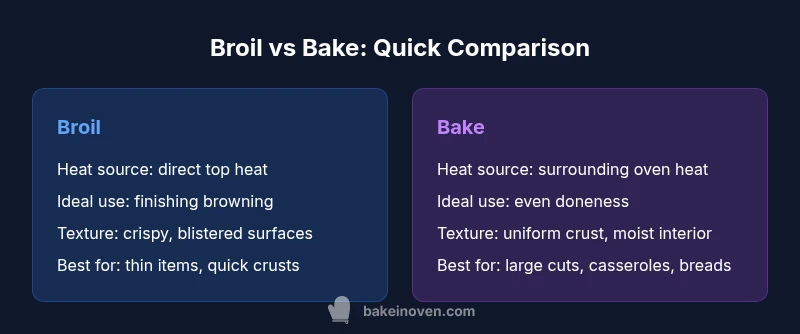
Comparison
| Feature | Broil | Bake |
|---|---|---|
| Heat source | Direct radiant heat from the top element | Even, indirect heat surrounding the food (convection may apply) |
| Ideal use | Finishing browning and crust formation on small or thin foods | Cooking through larger items to ensure even doneness |
| Texture outcome | Crisped, browned surface with possible charring | Even crust with moist interior and gradual browning |
| Typical timing | Very short finishing phase (1-6 minutes) if monitored | Longer cook times to ensure interior doneness (dependent on item) |
| Moisture risk | Surface can dry quickly if overused | Moist interior maintained when not overbaked |
| Equipment considerations | Broiler pan, close monitoring, watch for splatter | Preheated oven, appropriate bakeware, avoid overcrowding |
| Best for beginners | Good for learning timing with supervision | More forgiving when following recipes with clear finish |
Benefits
- Fast browning and crust formation
- Adds texture and visual appeal quickly
- Requires minimal prep when used as finishing step
- Works well for small items like fish fillets or veggie slices
- Can reduce overall cook time when used judiciously
Negatives
- Higher risk of burning if left unattended
- Uneven results for thick cuts or dense casseroles
- Requires careful monitoring and pan placement
- Can dry out delicate proteins if misused
Broil is best for finishing browning and crisping, while bake remains the reliable method for even, thorough cooking.
Use bake as the default for thorough cooking and even texture. Reserve broil for rapid browning and finishing touches, especially on thin cuts or small items. With practice, you’ll know when to switch heat modes to achieve the best crust, color, and doneness.
Frequently Asked Questions
What are the main differences between broiling and baking?
Broiling uses intense direct heat from above for quick browning, while baking uses surrounding heat for even, thorough cooking. Browning, crust formation, and interior texture differ based on heat exposure and time. Understanding these differences helps you choose the right method for your dish.
Broiling gives you quick browning; baking cooks through evenly. Pick the method based on texture you want and how thick your food is.
Can I substitute broiling for baking in most recipes?
Not usually. Broiling can finish a dish with browning, but it doesn’t reliably cook thick or dense items through. Use bake to cook the interior, and reserve broiling for the final crust or glaze.
Broil is great for finishing, not for cooking the inside of thick foods.
What foods are best broiled?
Thin cuts of meat or fish, vegetables cut into small, uniform pieces, and dishes that require a fast, intense crust. Avoid broiling very thick foods for safety and texture reasons; they may brown on the outside before the inside is done.
Great for thin cuts and finishing touches, not ideal for big roasts.
How do I prevent smoking or burning when broiling?
Preheat properly, place the rack near the top but not flush with the element, and keep a close eye on the dish. Use a broiler pan to separate fats, and reduce heat or distance if smoke appears. Clean the pan to avoid flare-ups.
Watch closely, keep the oven venting, and use a broiler pan to catch fat.
Is broiling safe for dairy-based sauces or custards?
Broiling dairy-based dishes can lead to scorching or uneven browning. Safer to bake or finish with a gentle broil for short bursts, or to use a separate finishing step away from dairy-rich sauces.
Broiling dairy can burn easily; use caution and finish with care.
Key Takeaways
- Decide heat by texture goal: browning vs doneness
- Use broil as a finishing move, not the primary method
- Choose bake for larger, thicker items needing even cooking
- Monitor closely when broiling to prevent scorching
- Combine bake then brief broil for best crusts