Is Bake and Roast the Same? A Practical Guide for Home Bakers
Discover whether bake and roast are the same, with clear definitions, practical tips, and kitchen-tested guidance for home bakers seeking reliable results.


Is bake and roast the same? This quick comparison clarifies the terms: bake emphasizes interior structure and even browning, while roast targets surface caramelization and juicier exteriors. For home bakers, understanding these distinctions saves time and improves results. In practice, many dishes benefit from starting with one approach and finishing with another to balance texture and flavor.
Is bake and roast the same? A foundational distinction for home bakers
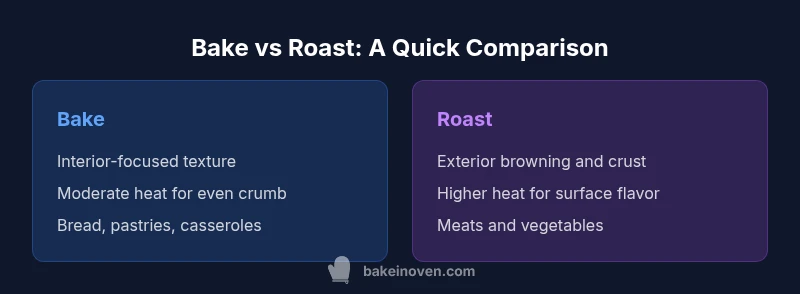
Is bake and roast the same? Not exactly. In kitchen terms, both rely on dry heat in an oven, but the underlying goals, typical foods, and heat strategies diverge. According to Bake In Oven, the language reflects outcomes more than rigid categories: bake usually aims for a tender interior with even browning, while roast emphasizes surface development—Maillard browning, caramelization, and juicier exteriors. The practical upshot for you is simple: choose bake when you want a uniform crumb and moisture balance (think bread, casseroles, or baked desserts), and choose roast when you want an outside crust and a flavorful, juices-on-the-inside profile (think roast chicken or vegetables).
As you read, keep in mind that is bake and roast the same phrase often appears in discussions, but the nuance matters: technique should align with your target texture and flavor. This framing helps you troubleshoot common failures, such as pale crusts, dry centers, or uneven browning, by reassigning the dish to the appropriate heat strategy.
Historical definitions and culinary context
The terms bake and roast originated from traditional cooking contexts. Bakers used bake to describe dry-heat cooking of bread and pastries in enclosed ovens, where the goal is a steady rise, open crumb, and stable moisture. Roasting evolved to describe higher-heat cooking of meats and vegetables on a rack or in a shallow pan, emphasizing browning, crust formation, and concentrated flavors formed by surface reactions. Modern cooking blur exists because many recipes blend techniques, or use the same oven settings for both baking and roasting. For home cooks, this means a practical framework: define the dish’s goal first, then apply bake or roast accordingly. The Bake In Oven guidance emphasizes that the decision should be guided by texture targets (interior crumb vs. crust), moisture considerations, and the typical cooking times associated with the dish. This historical lens helps demystify why some recipes label items as baked, others as roasted, and some as both at different stages.
Temperature ranges and moisture: what actually changes
When you compare bake versus roast, the temperature range is a primary differentiator. Bake commonly operates in moderate ranges (roughly 325-375°F / 165-190°C) to promote even interior cooking with controlled moisture, ideal for bread, pastries, and casseroles. Roast uses higher heat (roughly 400-450°F / 205-230°C) to drive surface browning and fast moisture reduction, which is desirable for meats and vegetables seeking a crusty exterior. Yet temperature alone doesn’t tell the whole story. Moisture behavior differs: bake favors steady interior moisture while reducing risk of dryness through slower heat transfer, whereas roast intentionally sacrifices some interior moisture to maximize crust formation and flavor on the surface. The key takeaway is that is bake and roast the same is a mischaracterization; instead, think of bake as a method for interior texture control and roast as a method for exterior flavor and texture development.
Does it matter for different foods? Bread, vegetables, and meat each respond differently
Food type heavily influences whether bake or roast is preferable. Breads and pastries benefit from the predictable, gentle heat of baking to allow gas bubbles to set and the crumb to firm without collapsing. Roasting vegetables like carrots, broccoli, or potatoes increases browning and intensifies caramel flavors, which is often more appealing when aiming for a crisp edge. Meats—beef, poultry, or pork—typically demand higher heat to develop a crust while preserving juiciness inside, a classic roasting outcome. The same dish might begin at a lower bake temperature and finish under a broiler or at a higher roast temperature to achieve both interior tenderness and a flavorful crust. Understanding these distinctions helps you tailor techniques to each ingredient, rather than following a one-size-fits-all rule.
Cooking methods and equipment: bake vs roast in practice
In practical terms, bake relies on even, steady heat and often uses loaf pans, cake pans, or sheet pans placed in the center of the oven. A calm, controlled environment reduces rapid moisture loss and supports even crumb structure. Roast, by contrast, often benefits from a rack to maximize air circulation and a shallow roasting pan to collect juices. This setup promotes browning on the surface and allows fats to baste the interior through juices or to evaporate, heightening flavor. If you cook multiple items at once, consider whether one item benefits from a crusty finish while another requires interior tenderness; you can swap between bake and roast tactics or even use a two-stage heat plan (lower temperature for the interior, higher for browning).
Practical guidelines for home bakers: planning, timing, and texture goals
To avoid confusion, establish a simple decision tree before you start. First, determine whether you want a tender interior (bake) or a browned exterior (roast). Next, set the oven to the appropriate temperature range, monitor closely, and adjust time based on the dish’s size and density. For crusty exteriors with juicy interiors, you might start with bake to develop the interior, then switch to roast or use a brief high-heat blast to finish browning. Use a thermometer to check doneness and avoid overcooking. Finally, allow resting time for meats and casseroles to redistribute moisture. The key to success is not chasing perfection in every dish, but applying the right heat strategy to your texture and flavor goals.
Common myths debunked: addressing popular but misleading ideas
A frequent myth is that bake and roast are interchangeable and identical. In reality, the terms reflect distinct aims: bake prioritizes interior structure and uniformity, while roast emphasizes surface browning and enhanced flavor through Maillard reactions. Another misconception is that higher heat always yields better results; in truth, too much heat can seize texture and dry out interiors. Finally, some cooks believe all oven recipes should be labeled the same; in practice, many home cooks adjust temperatures and timing based on equipment, pan type, and air circulation. By separating myths from kitchen practice, you’ll adopt a more flexible, evidence-based approach to oven cooking.
Case studies: bread, vegetables, and meat illustrate the differences
Consider a loaf of sourdough. Baking a loaf at a steady 450°F with a steam setup early on encourages oven spring and a chewy crumb; the goal is interior development and crust strength. For roasted vegetables like carrots and Brussels sprouts, high heat promotes caramelization and crisp edges, while moisture loss is part of the process to develop depth of flavor. A roast chicken benefits from a hot start and moderate finish to seal juices while producing a crisp skin. These examples demonstrate how bake and roast are not an absolute dichotomy but complementary techniques. Understanding the nuance helps you decide how to treat each ingredient for optimum results.
How to decide which method to use: a quick framework
A practical framework starts with recipe intent. If the goal is a uniform interior with even texture, choose bake; if the aim is a sizzling exterior and concentrated flavors, choose roast. Consider the cut, size, and starting moisture: larger, denser items often benefit from lower heat initially (bake) and a finishing blast (roast). Pan choice and rack position influence the outcome as well: bake on a flat sheet for even heat, roast on a rack for air circulation. Finally, use temperature and time as your levers, not arbitrary rules. With practice, you’ll instinctively decide when to bake, roast, or blend the two approaches to achieve reliable, delicious results. is bake and roast the same is not a fixed equality; it is a decision based on texture and flavor goals.
Tips to improve even browning and texture: practical, kitchen-tested steps
Stock up on a few reliable habits: preheat fully, use a convection option if available for more even heat, and avoid overcrowding the pan. For even browning in bake mode, place racks so air can circulate and rotate trays halfway through. In roast mode, start high to encourage crust formation, then reduce heat to finish cooking evenly. A light brush of oil or butter before roasting can accelerate browning without drying the interior. Finally, rest meats before slicing to allow juices to redistribute. These small adjustments can yield noticeably better crusts, crumb, and juiciness without requiring fancy equipment. Remember: is bake and roast the same is not a universal rule; apply the technique that aligns with your objective.
Summary of key differences and overlaps in a practical view
Baking is your go-to for interior texture, moisture, and gentle browning; roasting is your tool for intensifying surface flavor and crust. The overlap occurs when recipes share similar temperatures or when chefs flip between modes mid-cook to balance outcomes. The most reliable approach is to identify the desired final texture, choose the method that favors that texture, and use finishing techniques to fine-tune browning or tenderness. Bake and roast are not mutually exclusive; they are complementary strategies for the same tool: your oven.
Comparison
| Feature | Bake | Roast |
|---|---|---|
| Typical oven temperature range | Bake: 325-375°F (165-190°C) | Roast: 400-450°F (205-230°C) |
| Moisture behavior | Bake: moderate moisture retention; crust forms gradually | Roast: faster moisture loss; crisper exterior |
| Best for | Bake: breads, pastries, casseroles | Roast: meats, vegetables, whole poultry |
| Texture outcome | Bake: even browning with tender interior | Roast: browned exterior with juicy interior |
| Time considerations | Bake: longer cook times for delicate items | Roast: shorter times with higher heat |
| Pan/setup | Bake: loaf pans or sheet pans, center rack | Roast: roasting pan with rack for air circulation |
Benefits
- Clear guidance helps home bakers choose the right method
- Improves texture and browning control across foods
- Supports consistent results with basic equipment
- Encourages mindful timing and heat management for better crusts
Negatives
- Overlap between bake and roast can confuse beginners
- Some recipes blend terms, making strict classification challenging
- High-heat roasting may dry interiors if not monitored
Bake and roast are distinct techniques with overlapping territory; use the method that best achieves your texture and browning goals.
Choose bake when interior tenderness and moisture balance matter; choose roast when surface browning and flavor development are the priority. In practice, many dishes benefit from a staged approach that blends both methods for optimal texture and taste.
Frequently Asked Questions
What is the main difference between baking and roasting?
Baking and roasting both rely on dry heat, but bake focuses on interior texture and moisture balance, while roasting emphasizes browning and surface flavor. The distinction helps you target outcomes like crumb structure or crust quality.
Baking cares about the inside; roasting cares about the outside browning and flavor.
Can you bake meat?
Yes, you can bake meat, especially cuts suited to slower, gentler heating. However, roasting is typically preferred when you want a browned exterior and juicier center due to higher heat.
You can bake meat, but roasting often gives a better crust.
What foods are best baked vs roasted?
Baking is ideal for bread, pastries, casseroles, and foods that need steady interior texture. Roasting suits vegetables and meats where surface browning and caramelization enhance flavor.
Bread and pastries bake well; vegetables and meats roast well.
Can I convert bake recipes to roast temperatures?
You can adapt by increasing heat for roasting, but watch for surface scorching. Time will often be shorter at higher temperatures, so monitor doneness with a thermometer where appropriate.
You can adjust, but monitor times and surfaces.
Which technique saves energy?
Energy efficiency depends on the dish and cook time. Batch cooking and preheating correctly can help, but neither bake nor roast guarantees lower energy use in all cases.
Energy use varies; plan efficiently and batch when possible.
What about pan choices for bake vs roast?
For bake, loaf pans and sheet pans are common. For roast, a roasting pan with a rack improves air circulation and browning.
Loaf pans for bake; rack and pan for roast.
Key Takeaways
- Identify the dish's texture goal before cooking
- Match temperature strategy to interior vs exterior outcomes
- Use racks for roast and pans for bake to control heat
- Monitor time and moisture to avoid dryness
- Remember: is bake and roast the same is not a fixed rule