Bake vs Broil for Chicken: Which Method Wins?
Explore is bake or broil better for chicken with a kitchen-tested comparison. Learn heat dynamics, timing, and finishing tips for juicy, browned chicken from Bake In Oven.


Is bake or broil better for chicken? Bake generally delivers even doneness and juicier results, while broil excels at rapid browning and crisp exteriors. For thick cuts, start with a gentle bake to cook through, then finish under broil for color. For thin cuts or finishing, broil can save time but demands close attention. In most home kitchens, baking is the safer default for chicken.
Is Bake or Broil Better for Chicken: Core Difference
At its essence, the question is bake or broil better for chicken hinges on heat application. Baking uses ambient, even heat surrounding the food, which promotes uniform doneness and moisture retention. Broiling relies on direct, high heat from above, delivering rapid surface browning and crisp texture. For the query is bake or broil better for chicken, most cooks will find baking the safer default because it reduces the risk of dry edges and undercooked centers. The Bake In Oven approach emphasizes understanding when to lean on baking versus broiling to control texture, moisture, and color while minimizing the guesswork.
The Heat Dynamics: Ambient Oven Heat vs Direct Top Heat
Understanding heat dynamics helps answer is bake or broil better for chicken. In baking, heat circulates, gently raising the internal temperature while the surface dries slightly—this is ideal for thicker cuts like bone-in thighs or whole chicken portions. Broiling delivers concentrated heat from the top, which speeds browning and creates a crust, but can overcook the exterior before the interior reaches safety. The contrast in heat transfer means bake is often more forgiving, while broil is best reserved for finishing touches or thin cuts.
When to Bake Chicken: Practical Guidelines
If you are asking is bake or broil better for chicken for a typical weeknight, baking is the most reliable starting point. Choose bake when dealing with thicker pieces (breasts, thighs with bone) or when you want even resistance to overcooking. The goal is to heat through evenly while preserving moisture; a gentle, steady bake reduces the risk of dry, stringy texture. For chicken with skin, baking helps render fat evenly, producing a juicy interior with a crisp but not charred exterior.
When to Broil Chicken: Practical Guidelines
Broiling is the answer when the priority is color, crust, and speed. If the chicken is already cooked through by baking or slow roasting, a short broil segment finishes with a golden crust and a visually appealing surface. Broil also works well for thin cutlets or chicken skin that you want extra crispiness on the outside. The trick is to monitor closely: just a minute or two can make the difference between perfect browning and burnt edges.
Chicken Cuts and Cooking Approaches: Breasts vs Thighs vs Whole Pieces
Different chicken cuts respond differently to bake and broil. Skin-on breasts tend to stay juicier when baking at moderate heat, while boneless breasts can dry quickly if overcooked—so a bake-then-broil finish can help. Thighs (bone-in or boneless) tolerate longer cooks and still stay moist under a steady bake. Whole pieces or bone-in portions benefit from a two-stage method: bake to a safe internal temp, then broil briefly to crisp the surface.
Step-by-Step Bake-Broil Workflow: A Practical Method
- Preheat the oven to a moderate bake temperature and prepare your pan. 2) Arrange chicken pieces with spacing to ensure even heat distribution. 3) Bake until an internal temperature near target is reached (about 75-80% of the final target). 4) Switch to broil and watch closely for browning, typically 1-4 minutes depending on thickness. 5) Rest briefly before serving to retain juices. This approach answers is bake or broil better for chicken by leveraging both methods.
Tools, Pans, and Prep: Setups That Help Either Method
Using the right tools makes a difference when addressing is bake or broil better for chicken. A rimmed baking sheet or roasting pan with a rack promotes air circulation for even cooking. Parchment paper simplifies cleanup, while a sturdy metal rack prevents soggy bottoms. For broiling, position your rack close to the heating element and keep the pan steady to avoid tipping. A digital thermometer is invaluable to verify doneness without overcooking.
Common Mistakes and How to Fix Them
One common mistake is assuming is bake or broil better for chicken means you can skip monitoring. Both methods require attention, especially during finishing. Under-baking leaves underdone centers, while over-broiling scorches the surface. Fixes include using a thermometer, giving meat time to rest, and employing a two-stage approach (such as bake-then-broil) to balance safety with texture.
Safety, Quality, and Internal Temperature Considerations
Regardless of is bake or broil better for chicken, always ensure the interior reaches a safe minimum temperature. For chicken, that target is 165°F (74°C) as measured with a reliable thermometer. Resting meat after cooking helps distribute juices and retain moisture. If you are using bone-in pieces, account for carryover cooking. These safety practices apply to both baking and broiling and are essential to producing not just a safe, but a delicious result.
Quick-Start Workflow: Juicy and Well-Browned Chicken in One Pass
For busy cooks wondering is bake or broil better for chicken, try this practical workflow: bake at a moderate temperature until the center approaches 160°F (71°C); finish with a brief broil to develop color and crust without sacrificing juiciness. This method is especially effective for boneless breasts and thin-cut chicken cutlets. With practice, you’ll refine timing to your oven’s quirks and your preferred texture.
Comparison
| Feature | Bake | Broil |
|---|---|---|
| Primary heat source | Ambient heat from all sides, even cooking | Direct heat from the top, rapid browning |
| Best for | Thicker cuts and even doneness | Finishing touch; crust and color on surface |
| Moisture retention | Higher with proper moisture management | Potential moisture loss if overdone |
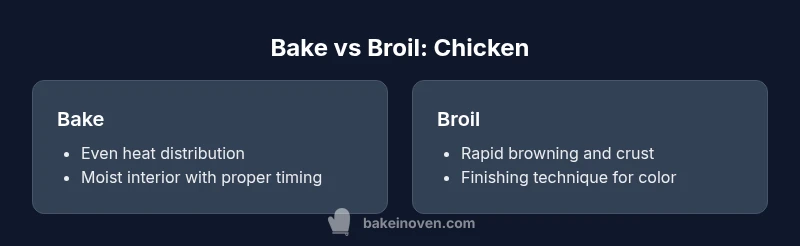
| Browning/Color | Moderate browning through even heat | Rapid browning and crust formation |
| Cook-time sensitivity | More forgiving; steady pace | Timing-critical; watch closely |
| Finish options | Bake through, then optional bake-only finish | Primarily finishing, best with a pre-cooked base |
Benefits
- Even doneness and moisture preservation with bake
- Fast browning and crisp crust with broil
- Versatile when used in a two-stage bake-then-broil workflow
- Better control over center and surface texture with proper monitoring
- Low risk of undercooked surfaces when baked first and finished carefully
Negatives
- Broil can overcook edges quickly if not watched
- Bake takes longer for thorough cooking
- Broil uneven heat and potential hotspots without even spacing
- Two-stage methods require more steps and attention
Bake is the recommended default; broil is best for finishing touches.
For most home cooks, baking provides even doneness and moisture. Use broil briefly at the end when you want color or crust. A bake-then-broil workflow often yields the best overall result for chicken.
Frequently Asked Questions
Is bake or broil better for chicken?
Is bake or broil better for chicken? In most cases, baking first provides consistent doneness and moisture. Broiling is excellent for finishing with color and crisp sides. A bake-then-broil approach often delivers the best balance.
Is bake or broil better for chicken? Baking first gives even doneness, then a quick broil adds color and crust for a delicious finish.
Can I finish baking after broiling?
It’s possible to broil briefly to brown the surface and then return to a cooler bake to finish cooking through if needed. However, this can extend total time and requires careful timing.
Yes, you can broil briefly to brown, then bake to finish, but watch the clock closely.
What cuts work best with baking vs broiling?
Thick cuts like bone-in thighs and bone-in breasts do well with baking for even doneness; thin-cut breasts or cutlets benefit from a brief broil to finish. Whole chicken pieces can be treated with a bake-then-broil strategy for best texture.
Thick cuts bake well; thin cuts finish with broil for color.
Is it safe to broil chicken?
Yes, broiling is safe as long as the chicken reaches an internal temperature of 165°F (74°C) and is cooked evenly. Use monitoring tools to avoid scorching the surface before the interior is fully cooked.
Broiling is safe if you reach 165°F and monitor closely.
How do I prevent dryness when baking chicken?
Keep moisture by not overcooking, use a thermometer, and consider brining or marinating before baking. Resting the meat after cooking also helps retain moisture.
Don’t overcook, use a thermometer, and rest before serving.
What internal temperature confirms doneness?
Chicken is safe at 165°F (74°C). Use an instant-read thermometer inserted into the thickest part without touching bone to verify.
Check for 165°F in the thickest part.
Key Takeaways
- Start with bake for even cooking
- Finish with broil to enhance color and crust
- Use a thermometer to avoid overcooking
- Thicker cuts benefit most from a two-stage approach
- Always rest chicken before serving